Tuesday, March 8, 2011

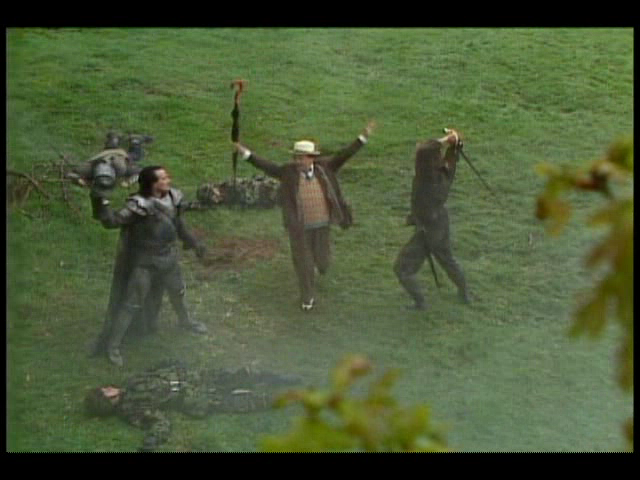
Serial 37: The Tomb of the Cybermen

Doctor: Patrick Troughton (2nd Doctor)
Companions: Jamie McCrimmon, Victoria Waterfield


Written by: Kit Pedler & Gerry Davis

Directed by: Morris Barry


Background & Significance:
I've said it before and I'll say it again: Patrick Troughton's era on Doctor Who was one of those defining times that helped shape the show's ultimate evolution. Because of the role of a producer and script editor on a show, each Doctor has a sort of ethos to his stories (except Tom Baker, who has three), a real tone or zeitgeist if you will. Prior to Troughton, the only format the show had ever known was predominantly educational and children's television.

The Troughton era was decidedly not nearly so educational. It saw the rise of off-planet adventures, the abandonment of historicals, the return of old and the creation of new alien-monsters, and sci-fi stories that were much more rooted in action/adventure than anything else. To be honest, it's a lot closer to what it is today than what it was just a few seasons before. It really reminds me of the current Steven Moffat era, which is about having big ol' adventures with big ol' fun and all that lovely noise and the like. (Also apt because Smith reminds me a whole hell of a lot of Troughton, so that's another little tie; but I'm getting ahead of meself.)

It was also The Golden Age of The Cybermen.

"The Tomb of the Cybermen" is the kickoff to Patrick Troughton's second season and it's.... It's good. Really good. If there's one problem with The Cybermen as villains over the course of their forty plus year long history, it's that they always seem to get a story that feels more or less the same. The Cybermen invade or attack a place. They try to convert everyone into Cybermen to add to their growing army. The Doctor beats them back. The Cybermen maybe march a bit. The Cybermen are defeated.

But this story is decidedly different. This shows The Cybermen in a far off future, long after they've died out, trapped in their Ice Tombs on the planet of Telos, stuck in suspended animation, waiting to be re-awakened.

What happens next is a taut sci-fi thriller not so unlike "The Robots of Death", but with a nice, healthy dose of horror/action with Patrick Troughton at the helm. It's high adventure and insane tension escalating as the story goes on. Well told, totally ethosy/zeitgeisty, and a total look into one of my all time favourite eras of the show ever. Honestly, it feels like something out of a classic pulpy adventure/sci-fi magazine, and I really think that if there's one thing Doctor Who should do more of it's pulp adventure. Not just that, but pulp adventures in the Troughton era, which just has the best of feels.

Unfortunately, it's also the earliest story that survives in its entirety from the Troughton era, and the only one that exists in its entirety from this season. That doesn't diminish the fact that this is a great story to have survived the BBC wiping campaign (miraculously. It was only discovered in the early 90s and is probably the most famous recovery to date). But it's a great introduction for new viewers to Troughton and the classic series, and it's a very famous Cybermen adventure. I mean, just take the title. "The Tomb of the Cybermen". That's a phenomenal title and it gets your imagination spinning in the best of ways.The best part is the story's living up to that title, which, if I may be honest, is no mean feat.

So let's get to it!

Tuesday, March 1, 2011

Serial 76: The Ark in Space

Doctor: Tom Baker (4th Doctor)
Companion: Sarah Jane Smith, Harry Sullivan

Written by: Robert Holmes (and John Lucarotti)
Directed by: Rodney Bennett

A note: Hey everyone! So, as you probably know if you're reading this, it's March, which means that I've been doing this blog for a whole year (also, Cassandra! Hi, Cassandra! (She helped)). Haven't missed a week (miraculously), so I think it's time for an anniversary celebration. To kick things off, I'm talking about the real start to the Hinchcliffe/Holmes era with a Robert Holmes story, but the fun doesn't stop there! We've got Troughton next week, the story that started it all the week after that, and then a regeneration trilogy I've been looking forward to talking about for a long time. Thanks for all your support over the past twelve months, thanks for sticking around in the tickling of my fancy, and most of all, thanks for reading. Means the world.

Background & Significance: If you were to ever talk about Tom Baker, you'd almost have to start here.

While "Robot" started off Tom Baker's first season and kicked off his seven year run, it still doesn't have the feeling of awesome that is the legendary Gothic Era under Phillip Hinchcliffe and Robert Holmes. I talked about this back when I reviewed the story, but "Robot" is a very different story in terms of tone and feature. It's a UNIT story, it's a little silly-goofy, it's very much got the silly campy feel of the Pertwee era, etc. etc. Sure, there's the script editing of Robert Holmes, but the story was still being guided by the influence of producer Barry Letts and it's written by Terrance Dicks, who had just overseen five years of UNIT stories, so the formula was in-built.

It only makes sense, then, that the next story, the first one overseen by Phillip Hinchcliffe, is where the era really starts.

"The Ark in Space" came from an idea by John Lucarotti, who had previously written such widely acclaimed historical Doctor Who stories such as "The Aztecs" and "Marco Polo". He'd been away from the show since the Hartnell era (that's almost ten years) and Holmes invited him back on the recommendation of outgoing script editor Terrance Dicks. Unfortunately, for whatever reason, the script came out less well than Holmes had hoped and (due to Lucarotti's living on a houseboat and problems with the postal service (both of which were, admittedly, beyond the show's control)), the script became unusable. Because they were set to wheels up on filming soon, Holmes scrapped Lucarotti's drafts and most of his ideas (excepting that of the titular "Ark in Space") and set about writing the damn thing himself because he just couldn't wait anymore.


He wrote the whole four-part story in eighteen days.

Magic. Serious magic. And to see this thing turn into a pretty stunning story is pretty awesome. It's also a wonderful tonal and thematic gateway into what would be a staple of Hinchcliffe/Holmes Doctor Who: great scifi ideas, heavy horror, thematic darkness. It's certainly not as much as the show would get in just a few stories, but their era certainly starts here. Even coming off of "Robot", this story is so different, different from anything seen on the show in about five years. It's one of the all-time classics and it's become a cornerstone of Doctor Who's overarching mythology; even Starship UK and Liz X are byproducts of the solar flares devastating Earth.

Not only that, but it's because of the absolute quality of this story that Holmes gets such free reign later on. Hinchcliffe (very famously) trusted Holmes's style and sensibilities and often encouraged Holmes to do page-one rewrites if he thought the story not up to snuff. This, of course, wasn't very popular with the BBC, which discouraged script editors from writing for their own show. Hinchcliffe, however, eventually fought for and won Holmes's right to write two stories per season. And without that, we wouldn't have "The Deadly Assassin" or "The Talons of Weng-Chiang".

Without those (or the other stories Holmes wrote or re-wrote from top to bottom), this era wouldn't be nearly the era that it was. And that would be sad. But that all comes from this. And thank goodness for that.

So let's get to it!

Tuesday, February 22, 2011

Serial 155: Battlefield

Doctor: Sylvester McCoy (7th Doctor)
Companion: Ace

Written by: Ben Aaronovitch
Directed by: Michael Kerrigan

Editor's Note: Hey, kids. Matt here with a small introduction to this week's blog entry. I know Cassandra is going to talk about it later, but I might as well hop in real quick with just a few passing words about Nicholas Courtney, who, as I'm sure you've heard, passed away yesterday.

It's strange that this week's blog and podcast both covered this story. 'Battlefield'. It is, in many ways, The Brigadier's last hurrah even though he did appear in several other stories (both in audio and on The Sarah Jane Adventures). But it's one of his absolute best and the timing really couldn't be better to do him a service.

So five rounds rapid and a moment of silence for the great and wonderful Brigadier. He was one of those real Doctor Who tent poles, a legend in his own right, and a tremendous presence without whom the show would not be the same.

He will be missed.


Background & Significance: One name: Nicholas Courtney.

"Battlefield" is the last onscreen appearance of The Brigadier on Doctor Who. It's befitting, especially because it's pretty epic, much like him. I know there are other reasons why this is a significant serial, but I just wanted to start off with him, especially in light of the news of his recent passing (which I'll discuss a little more in the final thoughts section). Because of the way I write these, I tend to do the commentary first, which I wrote before I found out the news. It's going to be a little bit of a jolt to read, but my hope is that the commentary captures my thoughts and feelings about the serial itself as well as celebrating Nicholas Courtney's storied contribution to and legacy in Doctor Who. Thanks for bearing with me, it's rather upsetting and I'm a little all over the place right now.

"Battlefield" is also notable for being the first serial of Season 26, not only McCoy's last season as The Doctor, but also the show's last full season before the long hiatus that would only be broken by the Paul McGann movie in 1996 before the reinstatement of the show in 2005. Not only does it see the first reappearance of UNIT since the Tom Baker serial "Seeds of Doom," and the Brigadier, as I've mentioned before (last appearing in "The Five Doctors"), but it also saw the return of actress Jean Marsh, who portrayed (semi-)companion Sara Kingdom in "The Daleks' Masterplan", in the role of Morgaine.

But enough of that. Let's take a closer look, shall we?

Tuesday, February 15, 2011

Serial 73: The Monster of Peladon

Doctor: Jon Pertwee (3rd Doctor)
Companion: Sarah Jane Smith

Written by: Brian Hayles
Directed by: Lennie Mayne

Background & Significance: "The Curse of Peladon" is one of my favourite Jon Pertwee stories. To me, it's a political intrigue story in the vein of Star Trek, featuring not only the return of The Ice Warriors and the introduction of such memorable characters as Alpha Centauri and King Peladon but also some of the best Jo ever, with her being a right bad ass in her a lovely dress and hairstyle. It's a really great story that I love for... so many reasons, not the least of which is because of its elegant simplicity and total departure into the realm of "something different".

Thankfully, I'm not the only one to think so.

After "Curse" went over as a hit, Barry Letts and script editor Terrance Dicks sought to recapture the magic. They re-assembled the Peladon dream team: same writer, director, crew, aliens, cast... Granted, Doctor Who magic is a rare thing. It's like lightning in a bottle. Individual stories tend to be anomalous in their perceived construction, and trying to redo something or recapture the magic in a "sequel" never seems to quite work out. There are exceptions ("Kinda"/"Snakedance"), but recapturing that same first experience is hard to replicate. It's the curse of sequels, I suppose. Dancing the same dance twice. Cliche cliche. All that. Such is the way with "Monster of Peladon", Jon Pertwee's second to last story.

Comparatively, the two are quite similar. Both deal with intrigue surrounding the Federation's plans and involvement in the affairs of Peladon and the various mysteries that come associated with this quirky little society. But while "Curse" was the story of royalty, aristocratic nobles, exotic ambassadors and delegates, courtly intrigue, a mystery in a castle full of guards and secret passageways, and a cage match (dear god that cage match), "Monster" is a story about Marxism, workers' rights, grievances, and a checklist through which we can tick off all of what made the original Peladon so great, none of which is (at least to me) nearly as interesting or compelling. Not only that, but all of the nice surprises in the original Peladon (specifically the Ice Warriors) all go out the window in favour of something that is... so much less special. And with two extra episodes.

In the run-up to "Monster of Peladon", there was a joke around the Classical Gallifrey offices about how "Monster of Peladon" would essentially be "The Curse of Peladon" but with more. "Curse of Peladon" was four episodes? "MONSTER" WILL BE SIX. Instead of two Ice Warriors, THERE WILL BE FOUR. The Doctor gets into a cage match in "Curse of Peladon"? In "Monster", HE WILL BE IN TWO. Well, two out of three ain't bad.

But man, I wish there were two cage matches instead of none.

So let's get to it!

Tuesday, February 8, 2011

Serial 134: Planet of Fire

Doctor: Peter Davison (5th Doctor)
Companion: Vislor Turlough, Kamelion, Peri Brown

Written by: Peter Grimwade
Directed by: Fiona Cumming

Editor's note: Hey, guys! This week Cassandra's in to talk about "Planet of Fire" (continuing a trend of good stories while I get shafted with bad ones. BUT THAT WILL CHANGE), but I'll be back next week to talk about "Monster of Peladon". Also, don't forget to keep checking out "The Doctor's Companion" for weekly recaps of the Classic series! Until then, enjoy!
Background & Significance: I adore Peter Davison.

Apparently I haven’t yet gotten the chance to blog a Peter Davison story, but I think this is a good one to start with, since I really love this serial. I hope you’re excited.

"Planet of Fire" is significant for a number of reasons. Chief among them is that it is simultaneously a Companion departure as well as an introduction. This is Turlough's last story (and Kamelion's, but nobody cares about him), and Peri's very first. Ever wonder how she wound up with the Doctor? Well, here it is.

The decision to cast Nicola Bryant as the new companion was actually met with some surprise and a bit of controversy, especially as time went on. This being Bryant's very first television acting role, she didn't have much experience; she would be portraying American botany student Perpugilliam Brown, and as a press stunt since nobody really knew who this girl was, she feigned an accent and they let everyone believe for the longest time that she actually *was* American. Which was a big deal for this little BBC sci-fi show. (Of course, she's very much British. Maybe she was the precedent for hiring Scottish actor John Barrowman to play everyone's favorite American captain now?)

This story is also notable as the last contribution of both writer Peter Grimwade and director Fiona Cumming to Doctor Who. Which is a shame, because both are pretty great. Grimwade was an accomplished writer and director, directing Tom Baker's last story, as well as Davison favorites "Kinda" and "Earthshock". As far as writing goes, we last saw him here on the blog with "Time-Flight", but he also contributed Turlough's first story, "Mawdryn Undead". Cumming directed some of the very best of Davison: his introductory story "Castrovalva", "Snakedance", and "Enlightenment", all of which are pretty great to amazing. So I think it's fitting that these two people's last contribution to a fantastic era is this incredibly solid serial.

But enough of all that. Let's take a closer look, shall we?

Tuesday, February 1, 2011

Serial 15: The Space Museum

Doctor: William Hartnell (1st Doctor)
Companion: Barbara, Ian, Vicki

Written by: Glyn Jones
Directed by: Mervyn Pinfield

Background & Significance: I find that watching these old serials can be a bit of a crap shoot at times. What's weird about it is that the mentality of "Will this one be good or will it be bad" (which is, by itself very surprising in places) is only part of the puzzle. Sometimes, a story will be really good for the first two and a half parts and then COMPLETELY jump the rails and randomly become something different. What was surprisingly good can suddenly turn awful and vice-versa. The best example of this that we've already talked about is "The Stones of Blood", which is good for the first... two and a half episodes? And then the little judgment lights come on and it becomes something different and not so interesting.

"The Space Museum" is a perfect example of such a phenomenon.

Hartnell's era itself is pretty middling in my opinion. There are plenty of classics ("The Daleks", "The Aztecs", "The Dalek Invasion of Earth"), but none of Hartnell's stories (at least, as many as I've seen) ever strike me as sheer genius on par with the rest of the show. Even "The Daleks" has three and a half episodes of greatness (The Dalek City stuff) followed by three and a half episodes of boring mediocrity (The Wilderness stuff). It's not even that I hate the Hartnell era (I don't), I just find it insanely average with few stories I out and out despise (the only one that I can think of that was actually not good was "The Chase", which we'll talk about in a couple months) and even the ones that haven't aged well or I find tremendously below average ("The War Machines") I can excuse because they're both tremendously silly and tremendously zeitgeisty.

But what does this have to do with "The Space Museum"?

"The Space Museum" is a bit of an odd creature. It's only four parts (a blessing for Pre-Tom Baker stories) and the first part has little to nothing to do with the next three. In fact, the first part is nothing short of incredible, breath-taking, excellent science fiction and the next three episodes are nothing but a complete and total let down, especially because you're set up to expect one thing and you get something that's totally and disappointingly different. The why of all this we'll go into once we hit it (it's about five minutes in part two that the story becomes something I'm just not interested in: a standard rebel-vs-establishment runaround), but it's just terribly disappointing, and what once had nothing but promise and memorability suddenly drops away and becomes nothing but apathetic un-memorableness and a huge letdown. Ah well. Crap shoot. It happens.

So let's get to it!

Tuesday, January 25, 2011

Serial 90: The Robots of Death

Doctor: Tom Baker (4th Doctor)
Companion: Leela

Written by: Chris Boucher
Directed by: Michael Briant


Background & Significance: Gothic horror.

That's right, ladies and gents, we've returned once again to the famed Season Fourteen of Doctor Who with a little story called "The Robots of Death". And there's really no other way to describe this story other than one of Gothic-style horror.

Like the other serials that make up this season in particular (though many of the other stories produced in the Hinchcliffe/Holmes era also share this distinction), this story has a definite horror-bent to it. I think this story in particular, however, neatly and perfectly encapsulates the entire aesthetic of this season. It's intense and kind of scary and yes, it's violent, but it's also fun and top-notch, quality Doctor Who. Everything from the production design to the direction, to the guest cast, to Tom Baker and Louise Jameson; everything fits together in such a seamless way that it's practically perfect. Watching this is a lot of fun and you can just get a sense of the harmony and perfect team that Hinchcliffe and Holmes really were.

This story is significant for a couple of reasons, the most important of which is the establishment of Leela as full-time companion. This being Leela's first official adventure since the Doctor picked her up in "The Face of Evil", the writer of that story, Chris Boucher, was asked to return to help flesh out her character more, especially since it was decided by Hinchcliffe and Holmes that she would only be a short-term companion (though Graham Williams did decide to keep her on as companion til the end of the next season).

Being the companion after Sarah Jane Smith is a tall order and a tough spot to fill, but I think this is probably the best Leela we've seen so far, and Louise Jameson does a great job with the part, as we'll soon see.

Also, this is the last story in which the oh-so-pretty Gothic TARDIS console set appears, as it was warped beyond salvagability in the off-season in storage and had to be replaced. Such a shame, because I love that thing. So pretty.

Enough of all that, though. Let's take a closer look, shall we?

Tuesday, January 18, 2011

Serial 122: Time-Flight

Doctor: Peter Davison (5th Doctor)
Companion: Nyssa, Tegan Jovanka


Written by: Peter Grimwade
Directed by: Ron Jones

Background & Significance: Spoilers: It's The Master. Again.

I go both ways in my views on the Jonathan Nathan-Turner years of Doctor Who. There are some things that he did that I'm personally very in favor of (the desire to make Doctor Who more action and excitey, no-more-than-four-episode stories, etc., his propensity to mine other classic stories for ideas, bringing in new blood to write for the show, casting Peter Davison, who is very clearly his vision for The Doctor) while other things make me question his judgment (Colin Baker's first season in general, his self-righteousness, his obsession with Doctor Who's legacy and past, not leaving after "The Caves of Androzani", Tegan...).

One of the things I go both ways on is his handling of The Master.

Now, I know we've talked about this before, but I LOVE The Master. I'm very much interested in antithesis characters for some reason. Yin vs Yang and all that. But there's a fine line with The Master. We've seen him at what is possibly his absolute best, but the really outstanding Master stories are rare. The Master as a character has a propensity to be tremendously silly and boring as it's really easy to write moronic, hokey villains who descend into schlocky tropes rather than come up with a convincing, smart, complex villain. Really great Master stories occur whenever The Master manages to out-think The Doctor. Really bad Master is when he acts like a mustache-twirling melodrama villain who chuckles and postures and never actually gets anything done.

My problem with Nathan-Turner's era is we get a lot of the latter Master rather than the former. When Jonathan Nathan-Turner came on as producer, he sought to bring on The Master twice a season because The Master was popular and would drive up ratings (which, as a producer, is fine because his job is to bring viewers to the show). Nevermind a character's power in scarcity; the more you make The Daleks appear, the less effective they are. The Master's the same way. Like The Joker (and the two are stunningly similar in a lot of ways), the more sparse his appearances, the more "OH DAMN" comes out whenever he actually appears. Not only that, but The Master's motivation needs to be very specific, from something as big as "taking over the universe" to something as small as "transforming to normal again". In "The Deadly Assassin" The Master just wants to regain a life he has squandered after twelve regenerations. Killing The Doctor, The Time Lords, and causing catastrophically devastating cosmic destruction is all just a wonderful bonus. Unfortunately, The Master of the Nathan-Turner era fast descends into two really base and lame motivations: take over the universe, kill The Doctor. Compare "Deadly Assassin" to "Mark of the Rani" and you'll see that The Master just becomes a one-dimensional villain with the sole motivation to kill The Doctor. Why? Never really explained.

Which brings us to "Time-Flight", the second Master story of Peter Davison's first season.

At this point, there's really nothing I can do except bemoan the downfall of a truly awesome character (seriously, did you SEE "The Deadly Assassin"?). Time-Flight is as flawed a Master story as they come and his once greatness has descended into... camp and boring motivations and... no. I'm sorry. But not taking The Master seriously as a villain wrecks him as a character. And that's the saddest. So let's watch as this gets terribly ridiculous and terribly weak as The Master skates the line towards "Mark of the Rani" level of awful.

So let's get to it!

Tuesday, January 11, 2011

Serial 97: The Invasion of Time

Doctor: Tom Baker (4th Doctor)
Companion: Leela, K-9

Written by: David Agnew (a.k.a. Graham Williams and Anthony Read)
Directed by: Gerald Blake

Author's Note: Hey guys! Before we get into this week's review, I just wanted to say that I'm one of the new co-hosts of this sw33t Doctor Who podcast called "The Doctor's Companion" where my co-host Scott and I discuss Classic Who stories in recap form not so unlike this blog (but also much unlike it too because it comes in "sound-word" form). The first episode is available for download here and I encourage everyone to subscribe in iTunes (or whatever tickles your fancy) cuz it's tons of fun and I promise a super great ride. And now on with the show!

Background & Significance: "The Invasion of Time" is, to me, something of a case study in the Graham Williams era. If nothing else, it really just reminds me that sometimes it's really hard to be hard on Tom Baker's second producer.

We've talked about it before, but it's definitely worth repeating here. The Williams era is, in my mind, a much maligned era, and how could it not be? He's coming right after three seasons of ridiculous high quality under producer Phillip Hinchcliffe, who had a much firmer grasp on his vision of what he wanted the show to be and was thusly able to execute it that much more effectively than Williams. In addition to that, the show's budget was slashed as hard times fell on England (or something. THIS ISN'T A HISTORY SHOW. WE ARE TALKING ABOUT DOCTOR WHO), Tom Baker (best-Doctor-ever-no-contests) was growing increasingly more and more heady and drunk when it came to his influence on the show, and the BBC came forward to tell Williams to cut back on the violence and horror of the previous era, focusing instead on something much more "important": Humour.

And then you remember that Hinchcliffe's vision was supported by the insane quality of having Robert Holmes in charge of the stories they were telling and you just realize that Williams... Williams didn't stand a chance.

But he gets props for trying.

"The Invasion of Time" is probably the thing I think of most when I think about Williams trying incredibly hard to make something that's awesome and matters and really cool. If you go and look at what Williams was trying to do, he was just trying to make the best Doctor Who stories he could make. The level of the fantastical was increased as Williams scoured the Earth for the best stories that he could find.

Building off the success of an extremely high water mark from the previous season's already extremely high quality, Williams thought Robert Holmes's fantastic Time Lord opus "The Deadly Assassin" a mythology rife with potential to expand and build upon. It had proved to be incredibly popular, so why not build on it by telling another story set on Gallifrey but with a different focus? He even asked Robert Holmes to come in and write it as a companion piece/sequel to "The Deadly Assassin". When Holmes refused and other possibilities proved fruitless, Williams and new script editor Anthony Read opted to write it together under a psuedonym in order to cut back on costs.

What we're left with is... this. And... Oh boy does it merit some discussion.

Before going into it, I'd almost recommend coming at it from a place of leniency. It needed to be made on the cheap, and what they're dealing with was... I understand why they did it and they get super props for at least trying it, because really... Why shouldn't you? Revisiting Gallifrey and Time Lord society was bound to happen at some point and choosing to revisit it wasn't a bad choice.

But... let's be honest... Neither Williams nor Read are Robert Holmes. And he's the only one who's proved himself capable of writing a quality Time Lord story. Ah well. They couldn't have known. Ce'st la.

So let's get to it!

Tuesday, January 4, 2011

Serial 51: Spearhead from Space

Doctor: Jon Pertwee (3rd Doctor)
Companion: Liz Shaw

Written by: Robert Holmes
Directed by: Derek Martinus

Background & Significance: Because of the way Classic Doctor Who worked as a convention, the way the stories were told and how they were serialized individual stories but without any real overarching serialization or continuity, it's rare for a Doctor Who story to be "important". "Pyramids of Mars" can be all the fantastic in the world. Still doesn't make it "important." Important stories are typically regeneration stories (not even necessarily companion arrivals or departures because they're almost always backgrounded excepting certain instances).

"Spearhead From Space" is one of those stories that is... well... Extremely important.

For one thing, "Spearhead from Space" is the first time in Who history that the Classical-Gallifrey-favourite line "God damn, Robert Holmes" comes into play. Holmes had previously done two Doctor Who stories ("The Krotons" and "The Space Pirates"), both Patrick Troughton stories (to lesser or greater effect), but "Spearhead From Space" is the first one that really mattered in the overall scope of Doctor Who both from a Robert-Holmes-quality standpoint and from a game-changer standpoint (Holmes would later change the game with such stories as "The Ark in Space", "The Deadly Assassin", and "The Caves of Androzani").

"Spearhead from Space" is significant for a number of reasons.

It's the first Jon Pertwee serial. It's the first time Doctor Who was broadcast in colour. It's the first Doctor Who story to be entirely shot on film. It's the first story of The Doctor's five-year exile on Earth, commonly known as "The UNIT years", which was the five year run under producer Barry Letts and script editor Terrance Dicks (despite Letts's noninvolvement here (it was produced by Derrick Sherwin) it really feels like a fairly "typical" Pertwee story) And it's the introduction of one of my personal favourite villains, The Autons (and oh my god what an introduction).

And Autons aside, all of that groundbreaking firsts stuff has nothing to do with Robert Holmes (the story concepts were developed by Producer Derrick Sherwin and Script Editor Terrence Dicks, the-all-shot-on-film bits was because of a labour strike, and the colour broadcast was a BBC mandate). And yet, it's easily one of my favourite Robert Holmes stories ever. It's exquisite science fiction horror, and all of the "mandates" (specifically the introduction of possibly the show's biggest format change of the classic series: that of The Doctor being confined to Earth during the UNIT years) feels like an afterthought amidst the gorgeous distraction of this tremendous story.

So let's get to it!