Showing posts with label Daleks. Show all posts

Tuesday, December 25, 2012

Serial 30: The Power of the Daleks

Doctor: Patrick Troughton (2nd Doctor)
Companions: Ben and Polly

Written by: David Whitaker (and Dennis Spooner)
Directed by: Christopher Barry

Background & Significance: Once the Doctor Who production team had made the decision to let William Hartnell step down as The Doctor, producer Innes Lloyd set about trying to find a suitable replacement. But instead of going for Hartnell 2.0 (which Robert Shearman cynically and perhaps rightly suspected was part of the point of "The Savages") they sought something different. They needed a fresh take by someone who could do new and good things with the character. Eventually they settled on Patrick Troughton, and according to legend, William Hartnell endorsed the decision, saying "If there's one man in England who can replace me it's Patrick Troughton!"

That is, of course, probably legend.

But after "The Tenth Planet" Hartnell would step down, leaving in his wake this new actor in the same role, and the production team put a lot of work into Troughton's new character and coming up with ways to delineate him from Hartnell. One of the great stories to come out of this time was the notion that Troughton might perhaps play the character "blacked up", although that was probably a passing thing one time in a conversation and was remembered years later from a purely "wtf were we thinking" retrospective. Eventually they settled on the idea of Troughton as a "Cosmic Hobo", which is, of course, how his Doctor is still remembered as a character to this day.

Now all they had to do was introduce him.

To do this, they brought in David Whitaker, the man who had defined Doctor Who more than just about anyone in the history of the show up to that point. It was he who made the TARDIS the TARDIS and it was he who had overseen Hartnell's fantastic first season. This would help, because what they were attempting (replacing the lead actor in the middle of a season) was ludicrously insane. They'd need to keep things as stable as possible to convince the audience that this was something that would be okay. In terms of companions, this meant keeping around Ben and Polly, the companions who had been around for the past three stories. In terms of villains it meant bringing back the Daleks, because putting this new Doctor up against his greatest foe would be the best way to encourage people that this Doctor was still The Doctor, only different.
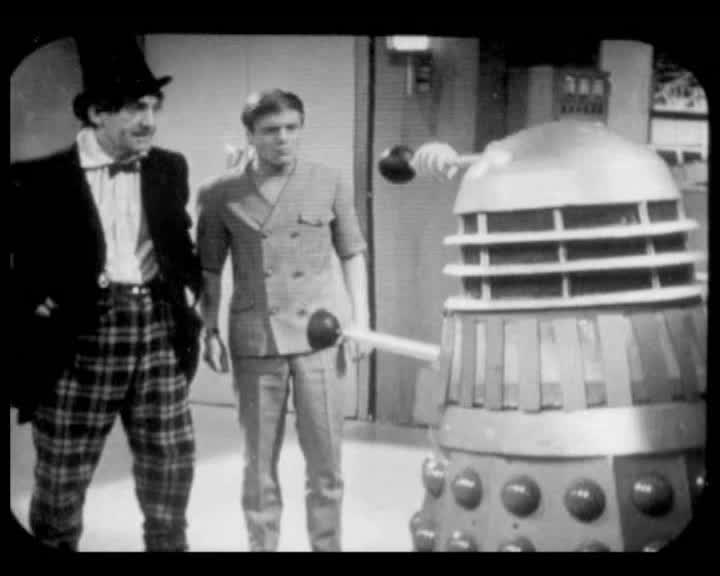
I mean, who else would defeat the Daleks? That's what The Doctor does.

Whitaker (to his credit) included a bunch of different ideas of this new Doctor, chief amongst which was the notion that this wasn't The Doctor's first regeneration (something that would, again, be picked up upon in "The Brain of Morbius"). Head of Drama Sydney Newman (who had helped bring Doctor Who to life) was somewhat dissatisfied by these aspects of Whitaker's script and requested a re-write. Whitaker (having completed his scripts and having moved on to something else) was unavailable, so duties fell to Dennis Spooner, Whitaker's successor as script editor, who trimmed up Whitaker's drafts and tweaked the portrayal of The Doctor to better align with Newman's ideas.

The result is "Power of the Daleks", the first ever regeneration story, the first ever 2nd Doctor story, and the last entry for this blog. And I'll just say this before we start: just like "Androzani" last week, I have been saving this one. And now for the last time...

So let's get to it!

Tuesday, July 24, 2012

Serial 60: Day of the Daleks

Doctor: Jon Pertwee (3rd Doctor)
Companions: Jo Grant

Writtten by: Louis Marks
Directed by: Paul Bernard

Editor's Note: Hey, guys! I have the week off because I'm prepping for what's going to be a really... weird entry in a few weeks. So Cassandra is here and talking about a big ol' loopy time travel story. But with Daleks. Word on the street is she liked it. And you know what they say about 'dem streets...

Background & Significance: This story is kind of a big deal. 

As the first story in Doctor Who’s 9th season, “Day of the Daleks” promised to not only open the season with a bang, but also—well, Daleks.

Since their apparent departure in the epic Troughton serial, “Evil of the Daleks,” the Doctor’s first foes stayed off the air for essentially four years, before the BBC started wheedling script editor Terrance Dicks and producer Barry Letts to bring them back.  

But bring them back they did, and, though originally intended to appear at the very end of the season, instead got inserted into this lively little adventure, to open the season with a bit of spectacle.

“Day of the Daleks” is written by Louis Marks who wrote the enjoyable serial “Planet of Giants” wayyyy back in Hartnell’s second season.  He would later go on to write “Planet of Evil” and “Masque of Mandragora,” which gives him a pretty solid track record, at least in my book.  It’s directed by Paul Bernard, who would later go on to direct “The Time Monster” and “Frontier in Space,” so his track record after this is…not so good.  I honestly have no idea if this was a fluke or what, because… wow.

Anyway.  Enough of all that, let’s take a closer look, shall we?

Tuesday, May 15, 2012

Serial 104: The Destiny of the Daleks

Doctor: Tom Baker (4th Doctor)
Companion: Romana II

Written by: Terry Nation
Directed by: Ken Grieve

Background & Significance: With two years of Doctor Who under his belt, it's only fitting that producer Graham Williams would choose to bring in The Daleks for a turn. It's weird. There's not REALLY a producership or era that happens without eventually doing a Dalek story (the Troughton seasons are a notable exception, but then again, Troughton is more era than producer, methinks, and he did get two kick ass Dalek stories up front).

But this is the Graham Williams submission to the Dalek canon, and as you might expect it is deliriously problematic.

For a start, this is the last story Terry Nation wrote for Doctor Who, so that's something to look forward to. It's also the first of many, many returns for Davros and a great posterchild for all the Davros stories moving forward, teaching the people who do the stories a great number of things about how Davros should and should not function in a story. Perhaps the greatest mistake was replacing David Wisher with David Gooderson, and it's not that Gooderson is bad, it's just that his interpretation is impossibly way too Hitler-on-the-nose if you know what I mean. It's also the only Doctor Who story directed by Ken Grieve. So that's a thing.

It's also with this story that we get the introduction of the second incarnation of Romana. In the previous story (the unfortunate "Armageddon Factor") Mary Tamm stepped down and decided to pursue other interests, leaving Lalla Ward to step in and be the "real Romana" or rather, the Romana that we all know and love. And it's not that Tamm is bad, she just happened to get stuck in "one big story" that people can't ever seem to really parse out and examine as six separate stories. So people seem to remember her as in a whole lot less Doctor Who than she actually was. Ward had a season and a half. Tamm had "only one story". It's inaccurate, sure. But it does mean that we get a regeneration that is impossibly controversial and helped along by the ever so cheeky Douglas Adams, who has also taken over as script editor. So that happened.

To sum up: we have Douglas Adams and Lalla Ward and the return of Davros and Terry Nation. What could possibly go wrong?

So let's get to it!

Tuesday, March 20, 2012

Serial 142: Revelation of the Daleks

Doctor: Colin Baker (6th Doctor)
Companion: Peri Brown


Written by: Eric Saward
Directed by: Graeme Harper

Background & Significance: In a lot of ways, "Revelation of the Daleks" represents the end to a number of eras in Doctor Who. Coming at the end of Colin Baker's initial season (which is problematic, to say the very least), this story really signified an ending to the first twenty two years of Doctor Who. From here on out, Doctor Who would be on borrowed time, always under the threat of cancellation. Always with a far abbreviated season than what it was typically used to.

It's also the end culmination of four years of Eric Saward as script editor. How fitting, then, that he should be the fellow to write it.

Because the Daleks always elevated the show's ratings, Producer John Nathan-Turner sought to bring them back for another season after their success in the previous one. Despite the fact that script editors weren't allowed to commission themselves to write for their own show, Saward somehow managed to wriggle his way around the legal workings of this by writing the scripts in the six weeks leading up to the renewal of his contract as script editor for the next round of Doctor Who. It's underhanded, sure. But he wanted to write The Daleks and Davros, and he'd be damned if he'd let any other "unexperienced" writers go out and write them in his stead.

To direct, the production team brought back the excellent Graeme Harper to handle the proceedings. So that's a plus.

But really, it's just the end result of the show's direction over the course of the previous four years. It effectively kills Colin Baker as The Doctor and is his last proper televisual adventure ("Trial" is a more complicated animal and not exactly the most proper of adventures where every "week" he's somewhere new) and is the last time location shooting for the show was shot on film. Location shooting in the future would all be shot on video tape. It's also the last script written by Eric Saward and is very... Sawardian in all its proper respects. As I'm so wont to say, Doctor Who writers only ever seem to get more themier (Moffat only seems to get Moffatier just as Davies only ever seemed to get more Daviesier) and "Revelation" proves itself to be the Sawardiest script of all the scripts he ever wrote for the show.

Wonder how that'll turn out.

So let's get to it!

Tuesday, February 7, 2012

Serial 36: The Evil of the Daleks

Doctor: Patrick Troughton (2nd Doctor)
Companion: Jamie, Victoria

Written By: David Whitaker
Directed By: Derek Martinus 

Background & Significance: The first four seasons of Doctor Who saw the show at its first peak of being "super popular". It happened early on and virtually almost overnight when The Doctor and his crew first went up against "The Daleks". Now I don't need to tell you because you already know, but The Daleks were popular. No like really. Super mega popular. There were Dalek toys and games and vernacular. The whole country had been seized by Dalekmania.

Of course, this bled into Doctor Who, helping to make the show the super popular phenomenon it eventually became, and without The Daleks, the popularity might never have come and Doctor Who might have died after just a few seasons.

And Terry Nation was smart enough to know this.

Because of their popularity, Terry Nation wanted to create a Dalek show, milking all he could out of his greatest creations. He pitched and wrote an idea for the BBC which would have featured Sara Kingdom and spun out of "The Daleks Master Plan". The BBC rejected the idea (although a production of the story was later released by Big Finish just over a year ago...) and Terry Nation turned to the United States to see if they'd be interested. Because The BBC realized that Nation wanted to go a separate way, they decided to write The Daleks out of Doctor Who for good and planned for the end of the show's fourth season.

As Terry Nation wasn't available, the production teamed hired "Power of the Daleks" writer David Whitaker to pen the adventure, meaning that the guy who wrote what is almost certainly the greatest Dalek story ever made returned to bring The Doctor into a final showdown with his oldest and greatest foe. And this was supposed to be it for them. Sure, they returned later in the Pertwee era and beyond all the way to today, but for all intents and purposes, this was their last appearance ever. And the fact that they were gone for seven years shows you how seemingly serious they were about it. For perspective, they were out of the show for as long as Tom Baker was The Doctor and for longer than the Nu-Who has been back on the air.

But even beyond that, it's a turning point for the show. It's the first story that really (and I mean really) utilizes the fantastic team of 2nd Doctor/Jamie and it's the first appearance of Victoria. So... yeah. Turning point.

So let's get to it!

Tuesday, October 18, 2011

Serial 68: The Planet of the Daleks

Doctor: Jon Pertwee (3rd Doctor)
Companion: Jo Grant

Written by: Terry Nation
Directed by: David Maloney

Background & Significance: Doctor Who's tenth season was a very basic season. It has a wonderful Doctor team-up anniversary story, a very excellent, iconic Robert Holmes story, a quite enjoyable UNIT story that sees the departure of the lovely Jo Grant, and... a very very long story.

As stated previously the last time we talked about Pertwee, "Frontier in Space" was designed to be the first half of Barry Letts's attempt to match "The Daleks' Master Plan" for the crowning champion glory record thing known as "the longest Doctor Who story of all time."

This was probably not the best idea, though. The Pertwee era is notorious for having overly long stories and stories that you can easily squeeze most of the air out of. This, of course, helped with cost (two six part stories is cheaper than three four part stories) but led to a little too much wheel spinning and really hurt the era as a whole, if you ask me. And now Letts wanted to do a twelve part story? (Jesus. How much padding would that take?) To offset the perceived wheel spinning and to alleviate some of the inevitable padding that would come from having that twelve part story, Letts broke the story in half with the first half seeing the return of fan-favourite villain The Master in Roger Delgado's final performance (although it wasn't supposed to be), while the second half saw the return of fan-favourite other villains The Daleks. See? Popular monsters! Tenth anniversary! Everybody wins!

To write it, the Doctor Who team hired creator Terry Nation to come back to script a six part Dalek story to continue the one started in "Frontier in Space". This brought Nation back to Doctor Who for the first time since "Daleks' Master Plan", as he'd been off in America or whatever trying (and failing) to get a Dalek TV show off the ground.

But that also leads to problems with this story. For one thing, after loudly voicing his disapproval of the interim three Dalek stories written in his absence ("Power of the Daleks", "Evil of the Daleks", and "Day of the Daleks") Nation was given the right of first refusal to write the Daleks anytime Doctor Who wanted to do a Dalek story. So in this case, Nation didn't refuse and got to pen yet another Dalek story seeking to come back with a vengeance, wanting to write The Daleks "as they should have been written". Unfortunately, you can just tell that Terry Nation doesn't know anything new or original to do with them (think Steven Moffat using The Silence in "The Wedding of River Song"). Not that he needs to. By creating the Daleks, he's almost allowed to coast on the fumes of their creation at this point because it is the most important/standout thing he ever did and nothing he ever did after creating them would be more important or more iconic, no matter how much he tried.

And no, I don't care that Terry Nation created Blake's 7. Nothing is more famous in Doctor Who than The Daleks. (Okay, maybe Tom Baker's scarf, but you get the idea).

So what we're left with is Terry Nation writing a Daleks story that comes long after the time when he stopped taking his marvelously devilish creations seriously. Really, "Planet of the Daleks" is just an excuse to lazily rehash and repeat things he'd already done with the Daleks back in other stories with them. Granted, this works in 1973, because most of the people watching Doctor Who barely remembered the original Dalek adventure (if they had even seen it at all) and what worked then would surely work now. So rehash and enjoy, Nation said. It was new to some people.

The problem with that is, watching it now, we can totally see the laziness dripping off this script. It's no secret that Terry Nation openly despised the first two Dalek stories that were written without his input (I'll talk about those someday, but there's a REASON "Power of the Daleks" and "Evil of the Daleks" are easily and widely considered two of the best Dalek stories of all time, whereas this or Terry Nation's next "Death to the Daleks" are not), but to hate them because David Whittaker did something new, original, and terrifyingly evil while you can't seem to get your head out of similar tropes? That's just bad. Be HAPPY for your creations being expanded into new territories and into vastly terrifying situations.

But Terry Nation couldn't do that, and what we're left with is this. Six episodes into Letts's supposed twelve part story, hopefully the wheels have stopped spinning (after the first six episodes which seemed like nothing but) and we can just move forward and The Doctor can foil The Dalek plan to take over the galaxy. Hopefully.

So let's get to it!

Tuesday, September 20, 2011

Serial 67: Frontier in Space

Doctor: Jon Pertwee (3rd Doctor)
Companion: Jo Grant

Written by: Malcolm Hulke

Directed by: Paul Bernard

Background & Significance: "Frontier in Space" was one of the five stories of Doctor Who's tenth seaso; as such, producer Barry Letts wanted to let out all the stops and do some good old fashioned homaging. He already had a Multi-Doctor crossover, but that wasn't enough. He set his sights on "The Daleks' Master Plan", seeking to challenge that story's record for "The Longest Doctor Who Story of all Time".

Okay. Before moving on... Flaw in his logic? Maybe he should have worried himself with  "Best" Doctor Who story of all time, instead of "Longest". "Daleks' Master Plan" was an overpadded session of ADD, in my opinion. Really good, but way too long.

But enough of that. What of this?

Because twelve episodes is a lot to do, Letts decided to split up this epic twelve parter (TWELVE! Anything longer than FOUR generally fails) into two halves, with each half featuring one of the two [at the time] iconic Doctor Who villains. The first half, (this half, the one we're talking about today) "Frontier in Space" would feature The Master. The second half, "Planet of The Daleks" would feature The Daleks and we'll talk about that at some point in the nearish future. (It's our next Pertwee story).

Inspired by The Cold War, this serial sees the creation of a new race of aliens, The Draconians, the return of the previous season's Ogrons (who were ape-like brainless servants of the Daleks... So... The Jem'Hedar?) from "Day of the Daleks" and also an attempt to turn Doctor Who into a space opera.

It also sees the return of Malcolm Hulke in his second to last story for the series. Also present, some Pertwee-era padding, perhaps the most ridiculous amount of capturing of The Doctor and his companion I've ever seen in a Doctor Who story, and a mostly useless use of The Master. A damn shame, if you ask me, especially considering this is Delgado's final Master story and the last Master story until the greatness that is "The Deadly Assassin".

And yet not so much, especially considering the plan they had for The Master, which I personally would have hated. But enough rambling!

So let's get to it!

Thursday, July 14, 2011

Serial 19: Mission to the Unknown

Doctor: None?
Companions: None?

Written by: Terry Nation

Directed by: Derek Martinus

Background & Significance:
Leave it to Terry Nation to come up with titles that mean no sense.

"Mission to the Unknown" is something of an odd bird. Perhaps the most obvious of these is that there is neither sign nor reference to The Doctor or his current companions (Vicki and Steven at the time; about to become Steven and Katarina) and all that we have in sight are The Daleks and their allies for the forthcoming epic "The Daleks' Master Plan".

So really, it's like a prologue.

If that sounds weird, that's because it is. It doesn't feel like Doctor Who, nor (do I think) is it supposed to. The show was about to capitalize on the last gasp of Dalekmania before the Daleks went into a four year retirement between the back two seasons of Hartnell and the first two of Troughton. At the time, Terry Nation was attempting to capitalize on his most famous creations, working on getting a Dalek television show made. As such, this becomes an almost backdoor pilot to what would have been a Dalek television series (think something like a Dalek show starring Sara Kingdom as head of a counter-Dalek squad or something). So it... Yeah. It's weird. But they got away with it, I guess.

It also marks the final contribution to the show by producer Verity Lambert, which is also strange. You'd think she'd go out on a bit of a higher note. But no, she goes out on a quiet, experimental, Doctorless story. Which is strange to me. After this John Wiles takes over. And that's all fun. But... yeah.

Also, as one final point of ego-boosting background: This is the halfway point for the blog. Apparently we've so far covered the first half of Classic Doctor Who, meaning it's all downhill from here. I know you probably don't care, but ummmm... Yeah. Milestone. Go us. Go team. Go everybody.

So let's get to it!

Tuesday, June 28, 2011

Serial 72: Death to the Daleks

Doctor: Jon Pertwee (3rd Doctor)
Companions: Sarah Jane

Written by: Terry Nation
Directed by: Michael Briant

Background & Significance: My question? What's up with the title?

Pertwee's final season is something of an odd bird. For one thing, we're long past the point where The Doctor is having proper UNIT adventures, so he's s free to swan off to wherever and whenever he wants, and he does. Which is good and he earned it and I'm happy for him... But it feels...

This story sees the return of the Daleks for the third season in a row. It's weird how The Daleks always move in waves. They appear like crazy in the Dalekmania of the first four seasons of Doctor Who and then just kinda... disappear for the rest of Troughton's run and then for the first two years of Pertwee and then appear like clockwork for four years. Although it's interesting to see how much the Daleks just become your standard, rote villains after a so many rote and unimportant or uninteresting appearances. They've just shown up too much and they've become stagnant (after just three Pertwee appearances), so it was time for The Daleks to get a massive, game-changing reboot in "Genesis of the Daleks", but I suppose that's another discussion.

It also sees the return of Terry Nation for Doctor Who. Nation, of course, gets first crack at writing any Dalek story because... god knows creative rights (which I'm all for, I just wish Nation was a better writer), but... man. Terry Nation. But I'll save the rest of that thought for commentary.

As a final point before we dive head long into the bulk of the discussion, it was around this time that Pertwee was starting to really become disillusioned with the programme, bored and ready to move on and all that. Of course this disillusionment/boredom happens with a Dalek story. I mean, Pertwee never exactly kept it secret that he totally never ever did have a thing for the fan-favourite pepper potts.

But with the slow weaning off of Pertwee we get the prominence of Robert Holmes, who you can almost feel conducting the background of the first episode at the very least. And... well... you know me. I loves me some Robert Holmes.

So let's get to it!

Tuesday, May 3, 2011

Serial 16: The Chase

Doctor: William Hartnell (1st Doctor)
Companion: Vicki, Barbara, Ian

Written by: Terry Nation
Directed by: Richard Martin

Background & Significance: If I have a problem with Terry Nation, it's the fact that he is often very uninventive with his most-beloved creations and he rarely does anything new or interesting with them, choosing to let them become silly ineffectual things rather than the former, evil, cold-hearted, ruthless beings.

Granted, Terry Nation can make plenty of excuses this early in the game. "The Chase" is in Doctor Who's second season, in the midst of the period many people still refer to as "Dalekmania" when any appearance of The Daleks saw a surge in ratings and popularity for the show (not that that's not the case now, but people were ravenous for the Daleks back then). It's also before the geniusness of David Whittaker's Troughton Dalek stories ("Power of the Daleks" and "Evil of the Daleks") the stories which (in my honest opinion) really showed you what the Daleks were truly and honestly capable of if pushed to the limit and how effective they could be when put in the right hands.

But, again, this is before that.

"The Chase" was commissioned as the third Dalek story soon after production of "The Dalek Invasion of Earth". The premise is simple: The Daleks chase The Doctor and his companions through time and space and much fun is had and it's rompy and then Barbara and Ian leave (which, much like "The Dalek Invasion of Earth" is the hands down best part of the story). Unfortunately, you can see the effectiveness of The Daleks wearing thin because this is just a mindless runaround. The Daleks that appeared previously were various degrees of facist bastards (let's commit genocide against our blood brothers The Thals purely because we can). But here, the Daleks are morons. This only makes sense, of course. More than anything else, Nation was more interested in spinning The Daleks off into their own show and riding that gravy train into the ground. He also sought to recapture the magic of his original imagination by creating natural enemies for The Daleks (The Mechanoids) that The Daleks could find in this never-really-realized TV show, but they just come out as total hogwash and a waste of everyone's time.

The result is a jumbled bore of a story, a string of unrelated set pieces that are varying degrees of interesting in theory, but totally wasted in favour of being tremendously silly and a little ridiculous. As with Nation's other scripts, the ideas are all solid and there, but it's the executions that suffer, which tells me a lot about what kind of writer he is.

It's because of stories like this that I perpetuate the theory that Terry Nation's writing in "Genesis of The Daleks" was way punched up by then-script editor Robert Holmes, because honestly? This story is a joke, a total disservice to The Daleks, and a stark contrast to the levels of quality Dalek stories that happen throughout the rest of the show's history.

So let's get to it!

Tuesday, December 7, 2010

Serial 151: Remembrance of the Daleks

Doctor: Sylvester McCoy (7th Doctor)
Companion: Ace

Written by: Ben Aaronovitch
Directed by: Andrew Morgan

Background & Significance: The Doctor has to face Daleks. Always. It's like a rule, and if it isn't, I'm of the opinion that it should be. That's not to say that I approve of Dalek overexposure. I don't. But at least once per Doctor (more possible if he's got a long run), methinks.

It's interesting to see how each Doctor handles the nefarious little buggers. Whenever I think about The Doctor facing off against The Daleks, I always think about that moment in "Doomsday" when The 10th Doctor strides into the room and starts dialoguing with the suddenly scared Cult of Skaro. More than anything, it just reinforces the notion that The Doctor is not your typical hero. Think about the heroes of other science fiction programmes (Malcolm Reynolds in Firefly or Starbuck in Battlestar Galactica) or even from a big-budget action movie/show (John McClane in the Die Hard movies or Jack Bauer in 24) and the difference is stark. That is not how any of them would handle The Cult of Skaro in that scene.

No. The Doctor's a guy who's all British and talky and can stride into the room full of the evilest creations in the universe and talk them out of shooting him. Not every Doctor handles them in that specific way (and oh boy will we see him act other ways), but the Doctor's approach to a solution to a problem is never the "I'm going to shoot them and blow them up"method (although remind me I said that next month). His response is always one of appealing to intelligence and arguing in favour of diplomacy and his reliance on his words and language. That's The Doctor's weapon. That's how he fights the evilest creations in the universe.

"Remembrance of the Daleks" is the 7th Doctor's turn to take them on.

Now, I know it's been quite a long time since we've done a McCoy story, but let's be honest. There's very little of him around (he out-serials Colin Baker by ONE story), and what there is hasn't been widely DVD'ed [yet]. And, because I really, really liked him when we talked about him last time and am all about delayed gratification, we're only doing two stories of him this year, and a "bunch" of him coming up on the other side of January.

But enough about blog politics! Let's focus on Dalek and Doctor Who politics! Much more interesting!

"Remembrance of the Daleks" is written by Ben Aaronovitch and came about because they wanted to give McCoy's Doctor a chance to go up against the Daleks. Producer Jonathan Nathan-Turner commissioned the story and then sent the drafts to Terry Nation to review for his approval. Nation was most pleased with the story, except for one element (which certainly merits discussion but we'll talk about that in part four) which he asked to be excised. Nathan-Turner "took his comments into consideration" and then politely never sent Nation another draft for perusal. The worst part is, "Mad Man" Terry Nation? He was... not wrong.

Ah, Jonathan Nathan-Turner. So consistently self-righteous. So disappointing.

"Remembrance of the Daleks" is considered one of the best McCoy stories and it shows a really nice Dalek vs. Dalek story with some pretty neat graphics and special effects. It's also a really great look at The Doctor and does a bit of a retcon of the first ever Doctor Who story, in a move that is.... questionable? Shall we say? And of course the ending to episode one is famous because it's uh... pretty frakkin badass. Even by today's standards.

Unfortunately, it suffers a bit from the poor storytelling that happened during the Jonathan Nathan-Turner years, but I'll overlook most of that in the light of other really great things about the story, which is thrilling and exciting and pretty damn solid. Also, Daleks vs. Daleks with The Doctor and Ace in the crossfire. What's not to love?

Well, there is that one choice at the end. But we'll talk about that later.

So let's get to it!

Tuesday, August 3, 2010

Serial 133: The Resurrection of the Daleks

Doctor: Peter Davison (5th Doctor)
Companion: Tegan Jovanka, Vislor Turlough

Written by: Eric Saward
Directed by: Matthew Robinson

Background & Significance: For Doctor Who's 20th Anniversary season, producer Jonathan Nathan-Turner sought to bring back old foes for The Doctor to face. We already talked about "Arc of Infinity", but what would a twentieth anniversary be without the return of The Doctor's oldest and most popular foe?

Unfortunately, while it didn't quite work out as planned, it did manage to make it in for Davison's third and final season, which I find fortunate, but I'll discuss the why I think that a bit later.

One of the most interesting things about this story, I find, is that it did have the blessing of Terry Nation while not being written by him. This is unusual, perhaps, because Terry Nation traditionally HATED Dalek stories that weren't written by him, which is sad, because "Power of the Daleks" is really stupid good.

(For the record, I recently listened to that one and god damn that one's fantastic awesome. Seriously really really fantastic awesome.)

What we have, then, is a a classic Daleks/Davros story with tons of the early 80's Star Wars sci-fi zeitgeist and such. We get the departure of Tegan (which is fortunate because I am a huge not-fan of Tegan) and a solid story starring Daleks and their interesting little plan that is interesting.

So let's get to it!

Tuesday, June 8, 2010

Serial 10: The Dalek Invasion of Earth

Doctor:William Hartnell (1st Doctor)
Companion: Susan, Barbara, Ian


Written by: Terry Nation
Directed by: Richard Martin

Background & Significance: Daleks are popular.

I know that goes without saying, but that's the way the world is. Since their first appearance, The Daleks have always been major players in the scope of Doctor Who. It was their appearance in Doctor Who's second story that rocketed the show into its must-see-TV status.

And as with all things, they needed to monetize on what they had.

To cope with the insane popularity of that second story and ignoring the fact that The Daleks had been completely defeated in their first story, the producers re-hired Terry Nation, creator of The Daleks, to pen another Dalek invasion story, something bigger, badder, and awesomer.

He came up with this, the story of The Dalek Invasion of Earth, explaining away everything, and writing a bad ass story that's a bit more worthy of The Daleks. Again, the Daleks need epic, and this was the first time they really fulfilled the scope and promise of The Daleks as these great and evil bad guys.

Not only that, but this serial is ridiculously significant not just for the return of the Daleks, but also for the first companion departure. Carole Ann Ford, who played Susan, decided to leave the show after she was not allowed to develop the character as she wanted, which is a shame, especially when you consider how important and meaningful a character like "The Doctor's Granddaughter" actually is. That said, this ending is.... just...

Well... We'll touch on that when we get there.

All in all, this is just a great serial, and after spending a ton of time dealing with The Doctor Who of the 70's and 80's, it's really fun to get back to the cheap B-movie delightful science fiction stories of Hartnell/Troughton Who. Not only that, but this could have been awful, but it wasn't. It's here that "Dalekmania" started, and the Daleks' popularity started to skyrocket. This was the first of several notable Dalek stories that would get told over the course of the next several seasons.

But enough of this blather! Let's get to it!

Tuesday, April 6, 2010

Serial 78: Genesis of the Daleks


Doctor: Tom Baker (4th Doctor)
Companions: Sarah Jane Smith and Harry Sullivan


Written by: Terry Nation
Directed by: David Maloney

Background and Significance: When Jon Pertwee abdicated his role as The Doctor after five seasons, he did it having the longest run as the character by at least two years. (Honestly, I find it incredibly cool that he was on the show for about the average length of a fairly successful TV show.) He left the show as a serviceable Doctor, his era coming with some new innovations (color, more action, more and cooler special effects) and a long, healthy run some very good Doctor Who stories and some new innovations (not the least of which was the introduction of The Master).

And then he got replaced.

Not only that, but the run of his replacement, Tom Baker, would be nothing short of positively legendary. Playing The Doctor for seven years (two years longer than Pertwee, and more than Hartnell and Troughton combined), he is an incredibly iconic Doctor, from costume to mannerisms, and the show was never more popular in its original run. Tom Baker's Doctor is widely considered to be the best and most widely known (although David Tennant fans might disagree) of all time, and with seven years under his belt, it's very easy to see why.

With the Fourth Doctor, the show became nothing short of a phenomenon and incredibly exciting as this goofy looking chap with a giant scarf and a silly mish-mash of clothes took center stage and showed the world what Doctor Who was really capable of.

But enough of that, what about this episode?

This episode, "The Genesis of the Daleks," is one of only two times The Fourth Doctor went up against his greatest foe. Shocking as that might sound, especially given the rampant popularity of The Doctor before and since, it's a mark of Baker's era that he wasn't *crutched* by Daleks and they weren't a foe for The Doctor to fall back on.

"Genesis of the Daleks," however, is perhaps most notable because it is the introduction of the incredibly iconic creator of The Daleks.

Davros

And really, that's the entire reason I wanted so desperately to see this episode. I loved him in the most recent series when The Tenth Doctor and his multitude of Companions ran up against him in "Stolen Earth/Journey's End," and the appearance of Davros and the backstory that comes with him is the thing that really grabbed me and sucked me into wanting to watch "The Old Stuff", which means it's really his fault that I'm doing this blog in the first place.

So I owe it to the Daleks' creator to talk about his introduction.

Oh. And it's about the creation of the Daleks. Who doesn't love that?

Let's get to it!

Thursday, March 25, 2010

Special Edition! Serial 21: The Daleks' Master Plan


Doctor: William Hartnell (1st Doctor)
Companions: Steven Taylor, Katarina, Sara Kingdom

Written by: Terry Nation and Dennis Spooner
Directed By: Douglas Camfield

Background/Significance: The Daleks need to be epic and to be written sparingly. They're like... The Joker (so's The Master, but kind of in a different way and also the same way) and they really lose their power if they appear too much or in a context that isn't... massive and epic. And you can only do massive and epic on occasion, not every week, or that power's lost too. (For more information, go watch the most recent series' "Daleks in Manhattan/Evolution of the Daleks" to see what I mean).

They're great villains and they deserve a great story. Which brings us to this one, "The Daleks' Master Plan." It's twelve episodes long (all but three of the episodes are lost), making it the longest single Doctor Who serial around (the next longest is Patrick Troughton's final serial: The War Games, which is ten episodes).

Fortunately for those who want them, this serial (as all those that are missing) has been released as an audio experience because (for whatever reason) all the audio survives and has been released.

Mavic Chen looks down on audio recordings; Zephon is confused.

The story was in Hartnell's third and "final" season (he did two serials in season four) and it's.... crazy long. I popped it on my iPod and experienced what was basically a five hour Doctor Who story, starring The Daleks as they chase The Doctor and his companions across time and space as they attempt to take over the Galaxy, starting with Earth.

So let's get to it.

(Also, as a note, because it's so long and because I experienced it in only audio, I'm going to try to just blast through it with minimal plot summary (because it's just so incredibly slow... and incredibly lengthy) and there's really only a few things I want to highlight).

Sunday, March 7, 2010

Serial 2: The Daleks


Doctor: 1st Doctor (William Hartnell)

Companions: Susan, Barbara, and Ian

Written by Terry Nation

Directed by Christopher Barry and Richard Martin

Background and Significance: In 1963, Doctor Who hit The BBC as an educational children's show. It's come a long way since then, obviously, and I could go on about it more, but really that's what Wikipedia is for.

The reason I mention that here is because in their second serial, The Daleks, Doctor Who took a huge turn that no one had expected or anticipated. Some dude named Terry Nation came in and wrote this serial. Starting here, the show became this "thrilling" adventure show with aliens and action and adventure and started its evolution into the show it is today.

And really, that makes this serial important for two reasons:

1) It sets up Doctor Who as a vehicle to tell exciting sci-fi adventure stories.
2) It introduces one of The Doctor's great archenemies: The Daleks

But enough introduction. Here we start. Endless fun. It's kinda rough, but endlessly fun. The serial (collection of episodes making a story; this storytelling method holds until Doctor Who's cancellation in 1989) itself is seven episodes long (all the episodes (save a few) I'll be talking about are twenty five minutes long) and boy howdy did it not need to be. But it's still fun.There's charm and innocence coming off this in waves. It's fantastic in the way the original Star Trek is fantastic.

One more disclaimer: There is zero budget for this show. Like. There's so not. Doctor Who has always had a reputation for being a show that's made on the cheap. Even the modern stories are done on the relative cheap, but their budget is much more respectable than the budget for this. What we're watching here is an educational kids show that aired on Saturday nights. There'd be no budget anyways (look at modern American public access children's programming), but put it in the 1960's and that just makes this laughable in the most charming way.

But enough of this silliness. What happens?