Tuesday, October 2, 2012

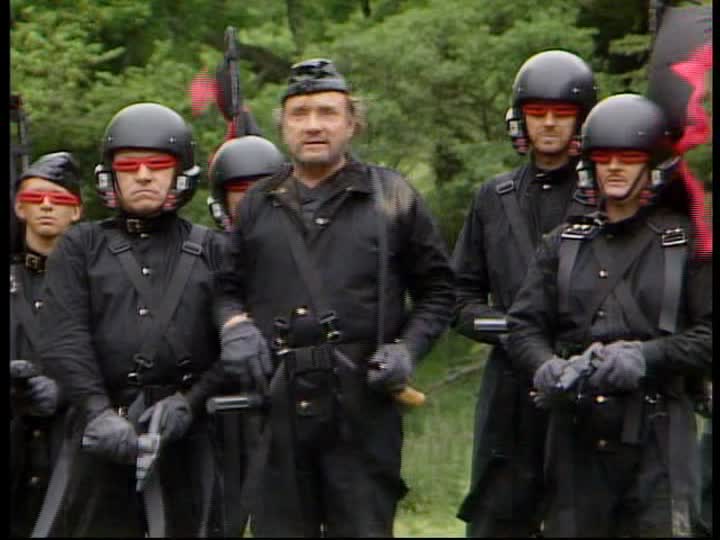
Serial 24: The Celestial Toymaker

Doctor: William Hartnell (1st Doctor)
Companions: Steven, Dodo

Written by: Brian Hayles (and Donald Tosh)
Directed by: Bill Sellars

Background & Significance: It's hard to think of a story with a sexier title than "The Celestial Toymaker". Part of that is because it comes off as inherently nefarious. Toymaker is the profession of a fellow obsessed with details and driven almost crazy by them. The title also sounds like a worthy adversary for The Doctor ("Celestial", that is, reaching out into the cosmos). And there's always (always!) something alluring about The Doctor going up against a nemesis. It's why The Master is so popular and why people will fetishize both The Monk and The Rani. So why not be excited about this? The title is WONDERFUL.

Because after the title it's all downhill from here.

"The Celestial Toymaker" is one of the few stories that was developed by John Wiles and Donald Tosh, the outgoing producer and script editor. As they developed it, Wiles and Tosh came up with an idea to effectively sideline The Doctor by introducing "The Trilogic Game", which The Doctor would solve while being invisible. In this, Wiles and Tosh (probably mostly Wiles) would circumvent William Hartnell and not have to deal with him, as the relationship between Wiles and Hartnell was openly confrontational/hostile. It's a shrewd move, but one that is at least understandable (if not a bit too passive aggressive for my tastes). And yet, Wiles and Tosh both stepped down from Doctor Who before this episode hit production. Wiles phased himself out during "The Ark" while Tosh stepped down during "The Massacre" to tweak Brian Hayles's scripts so they were ready for Innes Lloyd's producing and Gerry Davis's script editing.

And it's to this day considered a lost treasure.

Part of the reason for this (as Philip Sandifer so eloquently writes up here) is down to one authority deciding that certain stories (like "The Gunfighters") were bad while others (like this one) were good. And yet, outside of the underlying premise (The Doctor and his companions land in a dangerous funland full of evil, nefarious games that might end up killing our heroes) there's really... not much to it. And even with the underlying premise there's not nearly so much as you might instinctively believe. But we'll get to that. For now, know, that I dread this story, but mostly because it's the one last story that I truly hate as we pull into the end of this blog in just a few short months.

So let's get to it!

Friday, September 28, 2012

Serial 127: Enlightenment - The Black Guardian Trilogy Part III

Doctor: Peter Davison (5th Doctor)
Companion: Tegan, Turlough

Written by: Barbara Clegg
Directed by: Fiona Cumming

Background & Significance: With "Terminus" in the rearview mirror, the Doctor Who production team set about looking for a story that would wrap up this "Black Guardian Trilogy" that was the centerpiece of season twenty. To write it, Eric Saward brought in Barbara Clegg, whom he knew from his time working in radio. To direct, Nathan-Turner brought back returning stalwart Fiona Cumming, who had just come off directing the phenomenal "Snakedance".

For those keeping math at home, that means that this is the first, last, and only story in the history of Doctor Who (on television) to be written by a woman while also being directed by a woman. More than that, while it isn't the first story to be written-by-credited to a woman, it is the first to be actually written by a woman (Lesley Scott didn't actually do a word of work on "The Ark").

What's remarkable is that Nathan-Turner even managed to produce it. The story itself ran afoul of a labour strike (don't they always) and Nathan-Turner sacrificed what eventually became "Resurrection of the Daleks" to make it happen. Clearly this pained Nathan-Turner, who was a big proponent for The Daleks returning because, hey, ratings! But that sacrifice led to one of the true high points of the era and one of the best Classic stories, as far as I'm concerned. It's a personal favourite of mine, and as we round the corner towards the last three months of this blog, I love that I'm finally able to talk about it.

So let's get to it!

Wednesday, September 26, 2012

Serial 126: Terminus - The Black Guardian Trilogy Part II

Doctor: Peter Davison (5th Doctor)
Companion: Nyssa, Tegan Jovanka, Vislor Turlough

Written by: Stephen Gallagher
Directed by: Mary Ridge

Editor's Note: 'allo, chaps! Matt here stepping in to intro Cassandra's discussion of "Terminus". It's a mid-week thing because we're in the middle of a linked story (the things we do!) but I will be back in a  few days to discuss the fantastic "Enlightenment" so stay tuned for that. Also, appreciate the Cassandra because she's only got one more to go. Lucky her!

Background & Significance: "Terminus" is the second in a loose trilogy of stories featuring the introduction of new companion Turlough and the return of the Black Guardian from Key to Time.  As fate would had it, this story also served as a departure for Nyssa, who was supposed to fall ill and leave in the previous season, but managed to hold on til this story when JNT decided she'd truly run her course.

Granted, for all he brought to the show, I don't really agree with all of his decisions in a producer capacity, and this is one of them.  I personally love Nyssa, but she was never given the chance to grow as a character ever.  This really hurts her departure, because it pretty much comes out of nowhere (as we'll see); and even Davison himself was against the decision, believing Nyssa to be the best and most compatible companion for his Doctor (and he is not wrong).

Written by Steven "Warrior's Gate" Gallagher, you'd think this would be a much better outing with such a story under his belt.  I mean, he's already written a "suitable" companion departure for Romana, and "Warrior's Gate" was interesting and fairly cerebral, which I like in a Doctor Who story.  Unfortunately, I don't feel he lives up to the promise with this.

"Terminus" is the only Doctor Who story directed by Mary Ridge, who had a long-standing relationship with the BBC, but her stint as director for this story was so fraught with trouble and rushed (and it really shows), it ultimately resulted in a really icy and uncomfortable relationship/falling out with JNT, so she never returned.  Which is a shame, because there is some really good stuff buried in here, but...

Anyway, enough of all that.  Let's take a closer look, shall we?

Monday, September 24, 2012

Serial 125: Mawdryn Undead - The Black Guardian Trilogy Part I

Doctor: Peter Davison (5th Doctor)
Companion: Nyssa, Tegan, Turlough

Written by: Peter Grimwade
Directed by: Peter Moffat

Background & Significance: For Doctor Who's twentieth season, producer Jonathan Nathan-Turner had the idea to bring back a bunch of The Doctor's old villains in an effort to tie every story to the legacy of the show. The kick off story ("Arc of Infinity") featured the return of the "anniversary villain" Omega and the next story ("Snakedance") featured the return of the previous season's "Mara". There were plans for The Master to return ("The King's Demons") and plans were made for the Daleks' return at the end of the season in "The Return" (which fell through and became "Resurrection of the Daleks").

But the middle of the season featured a trilogy of stories that featured The Black Guardian as something of a background running villain. It allowed the story to do new and interesting things with new and exciting villains while still retaining the "returning villain" mandate.

This is widely referred to as "The Black Guardian Trilogy". Indeed, it's even boxed and sold that way on DVD as a trilogy of 5th stories. And yet, that's not quite accurate. See, the Black Guardian (as we find out here) is just a means to an end to finish replacing Adric. It's here that we get the introduction of a new companion: Turlough. As originally conceived, Turlough was somewhat duplicitous and (for lack of better phrase) "The Evil Companion". As an idea, this was one that captured the imagination of script editor Eric Saward, who was always looking at new ways to shake things up. They would roll out this character over the course of this "Black Guardian Trilogy" and once it was all said and done they could decide whether or not they wanted to keep him around as a permanent companion.

So what I'm saying is this trilogy should be called "Vislor Turlough, or How I Learned To Stop Hating The Doctor and Join The TARDIS crew".

Written by Peter Grimwade, who was trying his hand again at writing after the disaster of "Time-Flight", focusing away from directing after having a run of phenomenal stories. Fortunately, this time around he's much more successful. It's also the return of Peter Moffat to the directing chair. But perhaps most importantly, it's the return of Nicholas Courtney as The Brigadier. Ironically, last week we talked about him in his last appearance til this one, so much like The Brigadier here, we're jumping from one story to the next with no cover over inbetween. Granted, it was SUPPOSED to be William Russell as Ian Chesterton, but he wasn't available. Nor was Ian Marter (Harry), Nathan-Turner's second choice. Which left Nick Courtney to return.

And oh what a wonderful bendy return it is.

So let's get to it!

Tuesday, September 18, 2012

Serial 80: Terror of the Zygons

Doctor: Tom Baker (4th Doctor)
Companions: Sarah Jane, Harry

Written by: Robert Banks Stewart
Directed by: Douglas Camfield

Background & Significance: Usually when there's a shakeup in Classic Doctor Who there's a slow period of transition as the show moves into its new ethos. You see it in the Hartnell era when Verity Lambert slowly transitioned into John Wells slowly transitioned into Innes Lloyd with some crossover of stories there. Wells's only real contributions were "The Massacre" and "The Ark" ("Myth-Makers" and "Daleks' Master Plan" being Lambert commissioned) while "The Celestial Toymaker" and "The Gunfighters" were more Wellsian than they were Lloydian.

The transition, the weaning, really helps bridge the gap between a giant paradigm shift, and "Terror of the Zygons" is a fantastic bridge between the UNIT era and the Gothic Horror of Hinchcliffe/Holmes.

Written by Robert Banks Stewart in his first of two contributions to Doctor Who, this story features the last appearance by The Brigadier until "Mawdryn Undead" some eightish years later. Stewart's prior credits (or at least the one most influential on this story) included The Avengers, leading Stewart to really focus on writing his Doctor Who like The Avengers. Script Editor Robert Holmes eventually smoothed out the edges caused by this, but it's clear that this is Doctor Who unlike we've seen previously. This is really high on the rural adventure that The Avengers was so known for in the 60s, which is not unwelcome and instead comes across as tremendously exciting and delightfully fresh.

To direct, the production team brought back Douglas Camfield, one of the great Doctor Who directors, for his first contribution to the program since 1970's "Inferno". Unsurprisingly, Camfield was brought back by the tenacity of the script and tailored his style to fit that.

But really, this is the deep wane of the UNIT years. While UNIT is a present in this, it's more than clear that The Doctor has outgrown them and they have no place in the Hinchcliffe/Holmes era. That doesn't stop them from re-appearing twice more in this season (in "The Android Invasion" and "The Seeds of Doom"), but as you'll see in those stories, their opportunity had long since past and they're very, very faded into the background. The Brigadier isn't in "Android Invasion" and Harry and Benton aren't even in "Seeds of Doom". There were plans to kill The Brigadier off in this story (according to legend, it was even Nicholas Courtney's idea), but Hinchcliffe opted to not kill off one of the programme's main supporting players, which led to the quiet exit of UNIT instead of a bombastic blaze of glory.

In their defense, UNIT had had too many opportunities for the bombastic blaze of glory. Probably best to go quietly.

Oh and this story has the Loch Ness Monster. So if you're ever wondering which one that is, it's this one. This is the one in which Doctor Who does the Loch Ness Monster.

So let's get to it!

Tuesday, September 11, 2012

Serial 149: Delta and the Bannermen

Doctor: Sylvester McCoy (7th Doctor)
Companions: Ace, Mel

Written by: Malcolm Kohll
Directed by: Chris Clough

Background & Significance: As the first season of Sylvester McCoy was in full swing, a number of changes swept across the behind-the-scenes production of Doctor Who. First, John Nathan-Turner needed to rectify the fact that he had an "uneven" number of episodes to spread across and indeterminate amount of stories. There was the option to do a six parter, but that wasn't particularly attractive. The last time he had tried something that length it had cobbled the story before it had even begun and a four part story and a two part story felt like it was giving short shrift to the two part story. To compromise, they devised the notion of coming up with two three-part stories, one shot on location (in this season, "Delta and the Bannermen") and the other shot entirely in the studio (in this season, "Dragonfire").

Oh. And Bonnie Langford wanted to leave. So The Doctor was gonna need a new companion. And fast.

This left the show with a noticeable hole they needed to fill. The continuity Langford brought to the show as it  transitioned from Baker to McCoy cannot possibly be overstated, but now the 7th Doctor was going to need to move on and with his own companion. Cartmel, as script editor, set about devising a new companion almost immediately, sketching out the broad designs for a hip teenagery character who'd be more... shall we say "realistic" than the companions as of late. Peri was something of a socialite when it came down to it and Mel was never actually given a proper introduction story NOR was her history ever intimated as anything other than a bubblegum-chewing, aerobics-obsessed, bright, bubbly teenager. Cartmel wanted something different, something that would be a bit more realistic to the world of the 80s. Someone that wouldn't be focused so much on the jazzercise as the more punk and anti-establishment leanings that were present at the time.

So he came up with this character (whom he dubbed "Alf") with plans to introduce her after Mel's departure, but he also asked that the two scripts that were meant to cap the season ("Delta" and the previously discussed "Dragonfire") introduce a version of his "Alf" character, hoping that they would come up with something good that they could use instead of having to come up with a character on the fly later on. And applause to the delgation of that. I mean, even Robert Holmes did something similar when it came to Leela's introduction (handing off the responsibility to Chris Boucher). As we all know Ian Briggs's "Dragonfire" ended up giving us Ace while Malcolm Kohll's script ended up giving us a character known as "Ray" about whom I'll have much to say later.

Why Ray didn't work and was never mentioned again will certainly be point of discussion for this entry.

Kohll, it's worth mentioning, was not really ever brought back to write more Doctor Who. Cartmel, it seems, did have him in mind moving forward, but where Stephen "Paradise Towers" Wyatt and Ian "Dragonfire" Briggs were both brought back for "Greatest Show in the Galaxy" and "Curse of Fenric" respectively, it's interesting that Kohll never made it back for another story. Director Chris Clough, on the other hand, was invited back for another round of stories in the next season. Take that for what that's worth.

So let's get to it!

Tuesday, September 4, 2012

Serial 55: Terror of the Autons

Doctor: Jon Pertwee (3rd Doctor)
Companions: Jo Grant

Written by: Robert Holmes
Directed by: Barry Letts

Editor's Note: Hey, kids! I'm back with a quick quick intro to point out that Cassandra is on board to talk about some Autons today. It's a doozy of a story with a lot of moving pieces, and I honestly felt good about giving it up because there's still a bunch of great stories left to do so why not share the wealth? And with this story we're in the last four months of the blog! Hoo-rah!

But for now, I leave you with Cassandra...

Background & Significance:  So the announcement of Season 8 was a pretty big deal for Barry Letts and Terrance Dicks.

Due to the nature of Doctor Who's production scheduling, and how a creative changing of the guard takes some time, Letts didn't really get a chance to make much of a mark on Season 7.  However, with the advent of Season 8, there were quite a few changes.

Among these changes were the introduction of a gimmick of some sort to get new audiences tuning in to watch.  This gimmick arrived in the form of the Master, a Moriarty to the Doctor's Sherlock Holmes.  Letts and Dicks hoped that the Master might overtake the Daleks as the top foe for the Doctor, and aimed to include the Master in each of the 5 stories in Season 8.

Another change was the decision to not bring back companion Liz Shaw, who was deemed too independent to really work well with the Doctor.  The decision was made to bring on a male/female team reminiscent of Jaime and Victoria in the form of Jo Grant, who would assist the Doctor, and Captain Mike Yates, The Brigadier's second in command.  There were even plans for the hint of romantic possibility between the two, and it totally shows (and oh man, I ship them so hard).

Written by Robert Holmes and directed by Barry Letts, "Terror of the Autons" promises to be something fantastic, especially on a rewatch.  I'm excited.  Are you excited?  Because I am.

But enough of all that, let's take a closer look, shall we?

Tuesday, August 28, 2012

Serial 18: Galaxy 4

Doctor: William Hartnell (1st Doctor)
Companions: Vicki, Steven

Written by: William Emms
Directed by: Derek Martinus & Mervyn Pinfield

Background & Significance: Season three of Doctor Who might be the most peculiar and experimental the show ever got. It featured a standalone, Doctor-less, companionless one part story, a twelve episode Dalek epic, a companion-centric, Doctor-lite story, a four-part story that jumps seven centuries into the future halfway through, and a western that's also kind of a musical. It's a weird ass season, full of experimentation for the show.

But season three started somewhat more auspiciously.

By the time "Galaxy 4" rolled around, Doctor Who producer Verity Lambert was on her way out the door. This story and "Mission to the Unknown" were produced in the same production block as season two, but held over for the start of season three as the show tended to do back in the day. We've already talked about "Mission to the Unknown" and how good that was, but this is the last time Lambert got to produce a fully actualized story in the traditional classic, Doctor Who mold. Unfortunately, because there's a transition aspect to each producer taking over the show (producers typically shadowed their predecessor before assuming the reins in full) Wiles was apparently partially responsible for the production of this episode. And apparently it was not all peaches and cream, Wiles going so far at one point that he was reportedly thinking about firing Hartnell (which set the tone for his producership more than anything, I'd say).

But yes. "Galaxy 4". Written by one-time Doctor Who writer William Emms (who had written for Z-Cars and other contemporaneous ilk) and directed by first-time Doctor Who director Derek Martinus (who directed this only because Mervyn Pinfield backed out at the last moment) who would go on to direct some terrific stories across the rest of the 60s, it really is the quiet end to the Lambert era on Doctor Who. That's not to say Lambert went out without some great hits, but honestly it feels like she was building to "The Chase" or "The Time Meddler" (take your pick) and this story becomes one of the real forgotten stories of Doctor Who. That's probably because it's shoved in an easily looked-over place in the Doctor Who canon. Or because it's got a rubbish title. Or because it's entirely missing. I mean, why talk about "Galaxy 4" being missing when you can talk about "Marco Polo" or "The Massacre" missing. Those are the bonified classics.

Now that'll change, I'm sure, once the recently recovered third episode hits mass distribution, but until then we're still relegated to a story that's largely forgotten and widely dismissed and I have to wonder if that's deserved or not. And of course, me and my wonderings is why I do this blog. Or something. I don't know. Maybe I'll figure that out some day.

So let's get to it!

Tuesday, August 21, 2012

Serial 31: The Highlanders

Doctor: Patrick Troughton (2nd Doctor)
Companions: Jamie, Ben, and Polly

Written by: Elwyn Jones & Gerry Davis
Directed by: Hugh David

Background & Significance: In the Classic series there's always a crossfade across Doctors and production teams and it always takes a little bit for the production to steer the show into a new and interesting direction. This is perhaps most evident in "Robot," in which Tom Baker's first story is a Pertwee story produced by Barry Letts and written by Terrence Dicks. At its most lengthy, we have the transition from William Hartnell to Patrick Troughton.

"The Highlanders" is a big transition point, and not only because it's the first story to feature the 2nd Doctor's key companion: Jamie Robert McCrimmon.

Written by the developer of Z-Cars and one-time Doctor Who writer Elwyn Jones, "The Highlanders" finds itself as a bridge of sorts. That's not surprising. "The Highlanders" is a historical, and really the last true historical until "Black Orchid" some fifteen years later. And if you wanna go for something more attainable, like Doctor Who in a historical setting, you'd still have to jump all the way to "The Time Warrior", which was seven years after this. As a historical, it's clear it's on the way out. "The Time Meddler" as a thing pretty much cripples the pure historical by introducing science fiction elements (which makes for an admittedly cooler story) while "The Massacre" was a glorious swan song for John Lucarotti's brand of intense character drama.

"The Gunfighters" and "The Smugglers" are still fantastic.

But this is the last historical we'll talk about on this blog, and I feel it's a good time to look at the historical outside of a Hartnell context. Sure, the last time we did a historical was an unmitigated disaster (and possibly the worst entry I've written for this blog, hence the lack of link) but I think that maybe we can bring in some discussion or what have you as we dissect this moment of transition for both the Troughton era and the show in general. Historicals? What is it about them? And Troughton? How does early Troughton look as we slowly brush up closer and closer to his regeneration.

So let's get to it!

Tuesday, August 14, 2012

Serial 108.5: Shada

Doctor: Tom Baker (4th Doctor), Paul McGann (8th Doctor)
Companions: Romana II, K-9

Written by: Douglas Adams, Gary Russell (audio adaptation), Gareth Roberts (novelization)
Directed by: Pennant Roberts (and Gary Russell)

Background & Significance: As of the day I'm posting this, there are 106 episodes missing from the Doctor Who archives. The number would be 108, but two were returned to the archives last December and the number decreased accordingly. Unfortunately, those missing episodes were the first recoveries in eight years and it's doubtful many more will ever be recovered. To travel in the other direction, Doctor Who is going to outlast all of us because it's infinitely malleable and so long as stories exist, Doctor Who has the potential to exist. I'll be sad if there's Doctor Who stories still coming out after I die, but if there aren't I'll probably more disappointed than I ever would be sad.

As fans, this leaves us with the notion that Doctor Who has created a need that will never truly be satisfied. There are points where you might burn out on Doctor Who, but you'll always come back because you will always want your experience to be as complete as possible to make up for the fact that there's one in ten episodes that you will never see, and because there's stories that will air long after you die that you'll never see because you're, well, dead. We're obsessed with the gaping hole left simply by being Doctor Who fans, by the infinite wealth and treasure trove we alone are privy to and the wasted opportunities strikes us as inherently wasteful, because why waste a good story?

Which brings us to "Shada".

"Shada" is the only Doctor Who story that can never truly be "complete". Unlike those stories missing from the archives, (which hypothetically could be returned despite its unlikelihood) "Shada" was completely written, partially produced, and never completed, which is entirely different.

The serial was intended to be the last big hurrah of the Graham Williams era. Williams himself was really done with the program by this point, and between Tom Baker's increasing irritability and not being able to get a budget near what he wanted it to be (it's never near what you want it to be, which is, inevitably, "infinity dollars" (or "infinity pounds" as this case might be)) he decided to go out on an story penned by his script editor, Douglas Adams, one that would be funny and delightful and rompy and basically everything Williams ever wanted his era to be. He even planned for it to have a good budget, having been recently slammed his first two seasons by failing to account for a big, six-part season finale, which is why "The Invasion of Time" and "The Armageddon Factor" are so insanely, unbelievably cheap-looking. So he pinched his pennies and made "The Nightmare of Eden" and "Horns of Nimon" (and even "Creature From the Pit") on an unusually small and tight budget.

It was all looking to go awesome. There would be Time Lord intrigue (which Williams always worked into his season finales) and Douglas Adams's own particular brand of humor and lots of money so he could go out on a proper note.

And then this labour dispute happened in December and they targeted Doctor Who because Doctor Who was a really good target that would get their point across. Williams fought to get the whole thing done in time and did good on the location work and made some progress on the studio time, but the labour dispute turned even more sour, the BBC postponed all recording dates in December, and because Christmas programs were way more important to the BBC than Doctor Who, Williams found it impossible to schedule the five recording dates he needed to finish the story and get the whole thing done before the story would actually make it to air.

So Williams's planned swansong never aired and "Horns of Nimon" became his legacy.

The part that stings most about this is that Williams had half a complete serial, and that's the part that I think gets in most people's heads about this. The whole story is a big ol' question mark that's gotten Doctor Who fans since it first didn't air. (And who can blame them? Just hearing the titular "Shada" is a Time Lord prison is enough to kick your brain into overdrive. I know it was a story I became particularly enraptured with when I first became aware of it. Hell, I still am and I'm not even a Douglas Adams fan) The fact that we'll never see it as it "should have" existed is the biggest kick in the teeth and the one that pushes Doctor Who fans from "intense curiosity" to "obsessive need."

How obsessive a need, you might ask? Well, plenty of people have attempted to get a faithful retelling of Shada up and running for years and years. Ian Levine did one in the early 80s with script inserts in place of scenes that weren't filmed (and apparently now has a cut of the film that he personally financed with animation to fill in the gaps that weren't filmed). Nathan-Turner worked after the show's cancellation to secure Tom Baker to provide linking narration to the existing clips to piece the whole thing together in a way that would make it make sense, getting a home video release in 1992, which remains the best he could do. Big Finish got permission from Douglas Adams's estate to produce an audio adaptation of Shada with animatics to visualize the story as best as possible. Because they couldn't get Tom Baker to reprise his role they asked then-incumbent Doctor Paul McGann to be The Doctor for the story and adapter Gary Russell wrote around it in such a way that it made sense. This was released in May of 2003.

Fast forward to this year: for the first time, Adams's Doctor Who story has been novelized by Gareth Roberts based on Douglas Adams's script and notes. It's the first time an Adams Doctor Who story has been novelized.

It's been an unsurprising obsession, but my question becomes "so how is it?" We have three different source texts to work with: Nathan-Turner's Tom Baker narrated home video release in 1992, Gary Russell's 8th Doctor Big Finish audio/animatic adaptation in 2003, and Gareth Roberts's novelization. I think it'd be a good idea to talk about all three of these and see which one works best, which one doesn't, and how do they all add up to the larger picture of the swansong Williams (and Adams) never got? Not only that, but how do these two Doctors' interpretations compare? It was written for Tom Baker, but how does Paul McGann do?  Was Douglas Adams really a great Doctor Who writer? Can we as a mass collective of Doctor Who fans ever move on?

Strap in, kids. This is gonna be a long one.

So let's get to it!