Tuesday, November 8, 2011

Serial 147: Time and The Rani

Doctor: Sylvester McCoy (7th Doctor)
Companion: Mel

Written by: Pip and Jane Baker
Directed by: Andrew Morgan 

Background & Significance: Much like "The Twin Dilemma" and "Timelash", "Time and the Rani" is one of those stories that is almost universally reviled. It always ends up WAY low on those rankings of best Doctor Who stories (and by that I mean, always at the bottom of everything). Granted, the rankings almost always inevitably end up with Tom Baker stories and Dalek stories much higher on the list than, say, Colin Baker stories, but the fact still remains that this is one of those constants that will most likely never change.
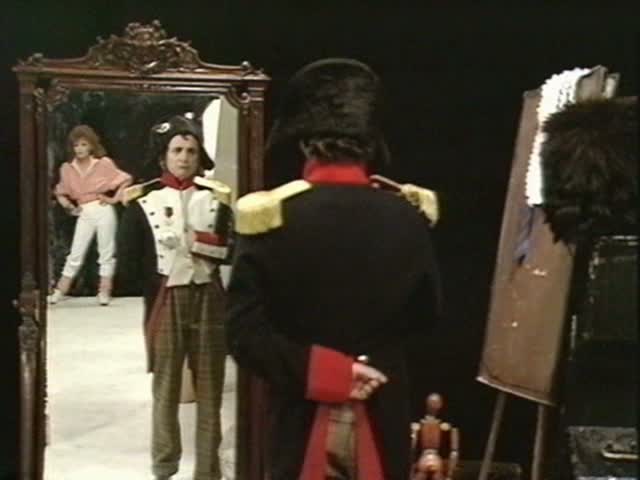
It's not really anyone's fault, though. Well, I suppose it is, but it's a miracle it exists at all.

After completing work on the marathon, nightmare of a season that was Trial of a Time Lord, Producer John Nathan-Turner went on a much needed holiday. After all, he was under the assumption that all the nonstop drama from the past few years on Doctor Who (Colin Baker's disastrous tenure (not Mr. Baker's fault) and in-fighting with his script editor (who eventually quit) and people in charge of the BBC who seemed to want nothing more than to cancel Doctor Who) was behind him now. He was moving on! To bigger and brighter pastures. He'd done his time. And now he could do something else.

When he came back from his trip in late December he found that his new assignment was Doctor Who, the show he had just left behind for good. He begged to be taken off the show, but if he left the BBC would cancel it, so he stayed on so that Doctor Who would not die.

But now he was faced with a number of problems. In just over eight months the next season would air. But he didn't have any scripts. He didn't have a new script editor. Hell, he didn't even have a new Doctor. Additionally, any attempts to woo Colin Baker back for a regeneration scene were met by Colin Baker's refusal to reappear after the way he was treated (and if I might commentary a phrase, "Good on ya, Mr. Baker"). Nathan-Turner immediately commissioned Pip and Jane Baker (hereafter referred to as "Pip'n'Jane") for a story, knowing they could write something shootable in a short amount of time, regardless of quality. They decided to bring back their "fan-favourite" creation The Rani. And... well... it turned out so good the first time that why not make her "even better"?

In mid-February Nathan-Turner found his replacement in Sylvester McCoy and had his new Doctor signed to a deal by mid-March. Also around this time, Nathan-Turner found his new script editor: Andrew Cartmel.

Both of these helped put all of the new season of Doctor Who in place, and the new Doctor's first serial commenced shooting in the first week of April, just five weeks after McCoy signed his name on the paperwork that would make him the new Doctor. Bonnie Langford would stay on as Mel (allowing some sort of continuity) and before everyone knew it, the cameras were rolling and the twenty fourth season of Doctor Who was a go, with everyone scrambling about to make it happen.

Needless to say there wasn't a lot of prep time. By the time Cartmel came in to work on the scripts they'd already been commissioned by Nathan-Turner, so he was just cleaning up what would already be established. Similarly, McCoy had barely a month to scramble together a vision and interpretation for his Doctor. The "darkness" and the "chess mastersmanship" would come from Cartmel's influence once the production team had more time to develop the show, which left McCoy to act more comedic and clown-like in this first season of his. It wasn't a perfect solution, but it made for at least something that was vaguely engaging in this first round of stories, and McCoy himself is a very comic actor, which made it a bit easier to play given the complete lack of preparation time to begin with.

The question mark pullover was, of course, Nathan-Turner's idea.

So you can see why this whole thing is leaning towards being something of a sloppy before it even started shooting.

So let's get to it!

Tuesday, November 1, 2011

Serial 29: The Tenth Planet

Doctor: William Hartnell (1st Doctor)
Companions: Ben and Polly

Written by: Kit Pedler & Gerry Davis

Directed by: Derek Martinus

Background & Significance: Arguably, "The Tenth Planet" is the most important Doctor Who story of all time. I mean, really, the only other stories that seem to have this much weight are the original story ("An Unearthly Child") and the recent reboot from 2005, "Rose". But still, even if those are more important ("An Unearthly Child" perhaps more than "Rose" because without it there could be no "Rose"), "The Tenth Planet" is right there at the top, and I defy you to name a more important story. "The Tenth Planet" establishes a paradigm that managed to keep Doctor Who on the air for... forever really. Everything since "The Tenth Planet" has been completely defined by it because without "The Tenth Planet" there would be no other Doctor Who stories. And why, you ask? Cuz who cares?

"The Tenth Planet" gives us our first regeneration.

At the time of his regeneration, William Hartnell was getting quite ill and increasingly more incapable of performing the rigorous day-in day-out routine of Doctor Who. I mean, this even comes after his health being less than perfect before he started working on the show, but it only deteriorated as he went on. Of course, because the show was proving popular enough that the BBC didn't want to cancel it because of the limitations of one ailing actor, producer Innes Lloyd and script editor Gerry Davis sought to replace Hartnell with another actor, putting into motion a notion that had started with the previous production team of John Wiles and Donald Tosh. Then again, they weren't actually thinking about Hartnell. They were more concerned about Hartnell's stubbornness and how he would get in the way and fight their attempts to divert the show's course from what Hartnell had seen as "the show's original vision", which he thought was his duty to uphold now that the original production team (Verity Lambert, William Russell, Jacqueline Hill, etc.) had all left him behind.

Now was the time to replace him, though.

When approached towards the end of his third season, Lloyd very respectfully asked Hartnell to bow out, citing his illness and increasing fragility as the main cause for concern. Both Hartnell and his wife consented to the choice with the knowledge that the show would go on but with a different actor. Hartnell supposedly only had two stipulations: that the show not forget the work he had done with the character and to honor his vision at the very least, and that they get Patrick Troughton for the job. The latter is a story for another day, but the former is something that has... at the very least... been observed and respected in the forty five years since that first regeneration. It's a testament to what came later that no one ever really forgot Hartnell or his contribution to the show, and that his Doctor is no less recognizable than any other Doctor that came after him.

But I'm getting ahead of myself.

So that brings us to "The Tenth Planet", the second story of the show's fourth season and the first of the show's fourth recording block (the previous story, "The Smugglers" was recorded at the end of the third recording block that the show might stay ahead of schedule a little bit, at least at the beginning) and it really is a transitionary story. Tag-team written by then-scientific advisor Kit Pedler and then-story editor Gerry Davis, we're left with a milestone, turning point story. Amidst our slowly weakening and dying main character we have a completely batshit insane story introducing one of The Doctor's most famous and enduring foes, The Cybermen. It's also the big transitional turning point for the Innes Lloyd era, or indeed the Troughton era coming up. No more are Lloyd and Davis stuck with stories commissioned by the previous production team. Now they're doing their own stories and suddenly we have a new paradigm: The Base Under Siege.

Can you already tell that this one's a little important? But I suppose the bigger question is, "What else is there beyond that?" If you may allow me to quote the most underrated Doctor who ever lived one last time: "Hmmmm...."

So let's get to it!

Tuesday, October 25, 2011

Serial 141: Timelash

Doctor: Colin Baker (6th Doctor)
Companion: Peri Brown


Written by: Glen McCoy
Directed by: Pennant Roberts

Editor's Note: Hello, gentle friends! Matt here saying that I have the week off but Cassandra has the unfortunate task of talking about Timelash, so I'd like to right-off-the-bat apologize to her (seriously, there's anger coming) because... well... I told her I'd give her two Colin Bakers, but by the time I realized I was doing that, this was the only one left. I'M SORRY. But that's okay, She'll be getting plenty of other good stories coming up as we continue this downhill race towards the end of this blog (which will be a sad but relieving day). No seriously, she has one in April that is just not fair. You don't even know how tempted I am to steal it from her. Or better yet I'll just blog it myself because I don't think I'd be able to resist it. And then I'll never release it. Because... I won't.


Anyways, enough blither blather. Cassandra needs to talk so she can get done with it so I'll toss the reins to her and then promise to come back next week with talk of regeneration next week with some post-regen in two. At least those are always good to talk about. I hope..


Background & Significance: So.... This story is pretty terrible. No, really, it consistently lands at the bottom of most fan polls, and if nearly everyone you talk to about it agrees that it's awful? You're probably in a lot of trouble.

The fact that it's written by a fairly new TV writer and rewritten from what was supposed to be a Dalek story doesn't help matters either. Since the parts turned out lopsided and part one ran too long with part two running too short, Eric Saward stepped in to help tweak things, and you can definitely see his handiwork all over this story (which isn't a good thing in this case).

"Timelash" is writer Glen McCoy's first and only Doctor Who story (with good reason) and director Pennant Roberts' second; Roberts previously directed "Warriors of the Deep" and the eventually-abandoned "Shada" prior to this, and Jonathan Nathan-Turner hoped that pairing together a seasoned director with the offerings of a novice writer would help improve the story, but that didn't really happen, as we're about to see.

There... isn't all that much else to say about this. Aside from it's awfulness. Again.

But enough of all that. Let's take a closer look, shall we?

Tuesday, October 18, 2011

Serial 68: The Planet of the Daleks

Doctor: Jon Pertwee (3rd Doctor)
Companion: Jo Grant

Written by: Terry Nation
Directed by: David Maloney

Background & Significance: Doctor Who's tenth season was a very basic season. It has a wonderful Doctor team-up anniversary story, a very excellent, iconic Robert Holmes story, a quite enjoyable UNIT story that sees the departure of the lovely Jo Grant, and... a very very long story.

As stated previously the last time we talked about Pertwee, "Frontier in Space" was designed to be the first half of Barry Letts's attempt to match "The Daleks' Master Plan" for the crowning champion glory record thing known as "the longest Doctor Who story of all time."

This was probably not the best idea, though. The Pertwee era is notorious for having overly long stories and stories that you can easily squeeze most of the air out of. This, of course, helped with cost (two six part stories is cheaper than three four part stories) but led to a little too much wheel spinning and really hurt the era as a whole, if you ask me. And now Letts wanted to do a twelve part story? (Jesus. How much padding would that take?) To offset the perceived wheel spinning and to alleviate some of the inevitable padding that would come from having that twelve part story, Letts broke the story in half with the first half seeing the return of fan-favourite villain The Master in Roger Delgado's final performance (although it wasn't supposed to be), while the second half saw the return of fan-favourite other villains The Daleks. See? Popular monsters! Tenth anniversary! Everybody wins!

To write it, the Doctor Who team hired creator Terry Nation to come back to script a six part Dalek story to continue the one started in "Frontier in Space". This brought Nation back to Doctor Who for the first time since "Daleks' Master Plan", as he'd been off in America or whatever trying (and failing) to get a Dalek TV show off the ground.

But that also leads to problems with this story. For one thing, after loudly voicing his disapproval of the interim three Dalek stories written in his absence ("Power of the Daleks", "Evil of the Daleks", and "Day of the Daleks") Nation was given the right of first refusal to write the Daleks anytime Doctor Who wanted to do a Dalek story. So in this case, Nation didn't refuse and got to pen yet another Dalek story seeking to come back with a vengeance, wanting to write The Daleks "as they should have been written". Unfortunately, you can just tell that Terry Nation doesn't know anything new or original to do with them (think Steven Moffat using The Silence in "The Wedding of River Song"). Not that he needs to. By creating the Daleks, he's almost allowed to coast on the fumes of their creation at this point because it is the most important/standout thing he ever did and nothing he ever did after creating them would be more important or more iconic, no matter how much he tried.

And no, I don't care that Terry Nation created Blake's 7. Nothing is more famous in Doctor Who than The Daleks. (Okay, maybe Tom Baker's scarf, but you get the idea).

So what we're left with is Terry Nation writing a Daleks story that comes long after the time when he stopped taking his marvelously devilish creations seriously. Really, "Planet of the Daleks" is just an excuse to lazily rehash and repeat things he'd already done with the Daleks back in other stories with them. Granted, this works in 1973, because most of the people watching Doctor Who barely remembered the original Dalek adventure (if they had even seen it at all) and what worked then would surely work now. So rehash and enjoy, Nation said. It was new to some people.

The problem with that is, watching it now, we can totally see the laziness dripping off this script. It's no secret that Terry Nation openly despised the first two Dalek stories that were written without his input (I'll talk about those someday, but there's a REASON "Power of the Daleks" and "Evil of the Daleks" are easily and widely considered two of the best Dalek stories of all time, whereas this or Terry Nation's next "Death to the Daleks" are not), but to hate them because David Whittaker did something new, original, and terrifyingly evil while you can't seem to get your head out of similar tropes? That's just bad. Be HAPPY for your creations being expanded into new territories and into vastly terrifying situations.

But Terry Nation couldn't do that, and what we're left with is this. Six episodes into Letts's supposed twelve part story, hopefully the wheels have stopped spinning (after the first six episodes which seemed like nothing but) and we can just move forward and The Doctor can foil The Dalek plan to take over the galaxy. Hopefully.

So let's get to it!

Tuesday, October 11, 2011

Serial 32: The Underwater Menace

Doctor: Patrick Troughton (2nd Doctor)
Companions: Jamie, Ben and Polly

Written by: Geoffrey Orme
Directed by: Julia Smith

Background & Significance: One of the things about Doctor Who that I always tend to love is whenever they go for the simple-yet-high-concept story, something so blindingly obvious that you're shocked you didn't think of it, or rather, that it hasn't happened before. This can be anything from "The Doctor hangs out with The TARDIS" to "The Doctor and the O.K. Corral". They're simple choices that fold into larger mythologies or stories and provide "a Doctor Who take" on whatever it is we're talking about.

Enter The Doctor visits Atlantis.

"The Underwater Menace" is only Troughton's third story. It's only Jamie's second. It's only Ben and Polly's sixth. It's still fairly early in Doctor Who lore (comparatively; we're in Doctor Who's fourth season, meaning it's right around the time The Initiative should be showing up to give you a scope of "just how early" we are in the show), but it does give the show the opportunity to touch on rich, unmined material that had previously been untouched. The Doctor and his companions had already been all over time and space, from meeting Marco Polo and Emperor Nero to encountering The Daleks several times to even getting encased as displays in a large space museum. And all this stuff is well and good, but don't you think it's time for The Doctor to touch on something else that's deeply mythological and legendary, that pushes the show into a giant cool direction?

Like I said: enter Atlantis.

It's interesting to think that in Doctor's Who's massive, almost-fifty-year history that he's only ever gone to Atlantis twice. Granted, we here at Classical Gallifrey thought the last time The Doctor visited that legendary lost city it was a complete and total disaster, but there are plenty who disagree. And yet... no one seems to disagree about "The Underwater Menace." That's never a good thing. You'll always find dissenting opinions about plenty of stories. I, for one, actively hate "The Armageddon Factor", but I seem to be in the minority. Not that people say it's terribly good, but it's far from the most consistently loathed of that season, or even of Tom Baker for that matter.

Regardless, there's always discrepancy and there's always argumentation, but when the fandom is pretty universally in agreement on a story's quality, and when that agreement swings negative, you're in a lot of trouble.

The most ironic thing is the fact that Doctor Who can't ever seem to do Atlantis right. Or good. Ever. At all. Maybe it's the fact that Atlantis is too untouchable or difficult to break down to do an interesting or compelling story. It's easy to get bogged down in the fictional mythology of a place that doesn't seem to exist, or to get wrapped up in the only real Atlantis story that can exist if you're giving it a one off (that of its fall; otherwise what's the point?), but surely there can be a better solution than this.

This story also has the reputation for having the first episode of Troughton that exists in its entirety (episode three), but the reason behind that has nothing to do with Troughton and more to do with someone's idea of the biggest practical joke I've ever seen in terms of Doctor Who history. That the first Troughton episode that exists does so for the most abstractly bizarre two minutes of Doctor Who I've ever seen is both blessing and curse, I think. We have to be grateful, I suppose, that the production team sought to poison our eyes and our brains for that two minutes so that this story could at least partly exist, I just wish they'd put something more memorable in, something I'd rather see. Like "Power of the Daleks". But I digress.

So let's get to it!

Tuesday, October 4, 2011

Serial 106: The Creature From the Pit

Doctor: Tom Baker (4th Doctor)
Companions: Romana II, K-9

Written by: David Fisher
Directed by: Christopher Barry

Background & Significance:
One of the things that strikes me most about working writers (or anyone in the professional entertainment industry, for that matter) is the notion of "Why do sucky people keep getting rehired even though their work sucks?" Take the Baker/Martin team for example. Those guys wrote literally the worst Doctor Who stories ever (or if not that, then my least favourites) and they were around for years and years and years, asked back over and over again. But why?

The answer to this, of course, is that they got the work done. Someone might not be the best writer or director, but they got the job done in good time and on a good budget. Quality is irrelevant. Money was saved.

Such is my thought on David Fisher, who returns to Doctor Who for the Douglas Adams season of Doctor Who with the last story of his we're going to be talking about here at the wonderful(?) Classical Gallifrey. Now, in the previous season he was responsible for the [what I still consider to be] absolute genius "Androids of Tara" and the very very strange "Stones of Blood", which was good except for the bit where it made a really weird and unwelcome left turn two thirds of the way through episode three and became a story I wasn't quite interested in. It's hard to count "City of Death" (because that was much more Douglas Adams than it was Fisher, who just did the base concept), so those two Key to Time stories and this one are all we really have to go on when it comes to judging David Fisher's contributions to the show.

But more on what he does with that in a little bit.

This story was the first story shot in that one Douglas Adams season and is surprisingly low budget seeming for such an early story (let's be honest, though: "Destiny of the Daleks", "City of Death", and "Shada"? Not cheap). It also is the first to not only feature Lalla Ward as Romana, but more specifically Romana II. It's a weird change, especially considering David Fisher had written all the scripts for this story before Lalla Ward was even cast (it was assumed Mary Tamm would be returning) and if you watch this you can totally tell that Fisher is writing Romana with a definite inspiration from her first incarnation than the second (it's the costume and the dialogue more than anything).

It also sees the return of veteran director Christopher Barry, who hadn't been seen on Doctor Who in three years (he'd previously done "The Brain of Morbius") and would never be seen on the programme again. The reasons are understandable, though. If that was the creature the production team came up with, I'd have left and never come back too. Same too with K-9, seen first here done by the voice of guy-who-is-not-John-Leeson, which is not exactly welcome. All in all it's a kickoff to this season I don't consider myself a huge fan of, which is weird because it's technically the third story of the season.

What I mean to say is it's a lot of things. Plenty. Too much. Worth discussing (yeah, boy). Ultimately a bit sour.

So let's get to it!

Tuesday, September 27, 2011

Serial 25: The Gunfighters

Doctor: William Hartnell (1st Doctor) Companions: Steven, Dodo

Written by: Donald Cotton Directed by: Rex Tucker

Background & Significance:
There's a weird thing in Classic Doctor Who, where incoming producers and script editors are shouldered with some leftover stories commissioned by the previous production team. This happened with the first season of Hinchcliffe/Holmes, in which the two of them were forced to produce a commissioned Dalek story by Terry Nation and a commissioned Cybermen story by Gerry Davis even though Holmes had zero interest in returning Doctor Who villains (especially The Daleks), or even with Nathan-Turner, where he and Chris Bidmead were forced to produce "Meglos" despite knowing that it was totally ensconced in the previous regime's tone and feel rather than their focus on "hard science" (ha!) instead of comedic slapsticky.

"The Gunfighters" is that for Innes Lloyd and Gerry Davis.

Commissioned by the previous production team of John Wiles and Donald Tosh, who were interested in another fun historical story from Donald Cotton, who'd previously "succeeded" (as far as they were concerned) with his work on "The Myth-Makers" (which we'll talk about more in a couple of months), this time set in the old west, specifically focusing on the legendary Gunfight at the O.K. Corral with all the tropes and exciting adventures and all that. Much like with "The Myth-Makers", Cotton chose to focus on the spirit of the story rather than being historically accurate (spoilers for "The Myth-Makers": that story isn't "historically" accurate much at all either).

Personally, I think that's a good approach. I think as a rule I'm more interested in the spirit of the thing rather than complete historical accuracy (I am watching a fictional show, after all).

Unfortunately, "The Gunfighters" is something of a final gasp of air for historicals. Innes Lloyd and Gerry Davis were more interested in taking Doctor Who to a more serious and science fiction place (hence the hiring of Kit Pedler) and making the show more focused on entertainment and adventure than the educational whatever place it had been for the previous several seasons. It was this team that implemented the first regeneration, after all, and the one that went head on into big sci-fi stories as soon as they could ("The War Machines", "The Tenth Planet", "The Moonbase", just to name a few), employing the base under siege meme in just about all their stories... I mean, the only time they ever even ventured into the past in any sort of way that mattered was when they picked up Jamie in "The Highlanders".

Regardless. I have made my point. This isn't exactly a story they wanted to make, nor is it one that did exceptionally well when it aired, nor is it one that's been well received in the many years since its airing.

But the problem, I think, comes from... I dunno, people being stupid, I guess. "The Gunfighters" is basically anything you could ever want out of Doctor Who. It's big and exciting and fun and funny and badass and a super huge huge blast. If only the production team at the time could have seen the merits of making a story in which The Doctor goes to the old west to take care of a toothache, because this is the stuff of good and continues the hypothesis that season three is possibly the weirdest and most eclectic season of Doctor Who that's ever been made. I mean, this story is basically the why of all that.

So let's get to it!

Tuesday, September 20, 2011

Serial 67: Frontier in Space

Doctor: Jon Pertwee (3rd Doctor)
Companion: Jo Grant

Written by: Malcolm Hulke

Directed by: Paul Bernard

Background & Significance: "Frontier in Space" was one of the five stories of Doctor Who's tenth seaso; as such, producer Barry Letts wanted to let out all the stops and do some good old fashioned homaging. He already had a Multi-Doctor crossover, but that wasn't enough. He set his sights on "The Daleks' Master Plan", seeking to challenge that story's record for "The Longest Doctor Who Story of all Time".

Okay. Before moving on... Flaw in his logic? Maybe he should have worried himself with  "Best" Doctor Who story of all time, instead of "Longest". "Daleks' Master Plan" was an overpadded session of ADD, in my opinion. Really good, but way too long.

But enough of that. What of this?

Because twelve episodes is a lot to do, Letts decided to split up this epic twelve parter (TWELVE! Anything longer than FOUR generally fails) into two halves, with each half featuring one of the two [at the time] iconic Doctor Who villains. The first half, (this half, the one we're talking about today) "Frontier in Space" would feature The Master. The second half, "Planet of The Daleks" would feature The Daleks and we'll talk about that at some point in the nearish future. (It's our next Pertwee story).

Inspired by The Cold War, this serial sees the creation of a new race of aliens, The Draconians, the return of the previous season's Ogrons (who were ape-like brainless servants of the Daleks... So... The Jem'Hedar?) from "Day of the Daleks" and also an attempt to turn Doctor Who into a space opera.

It also sees the return of Malcolm Hulke in his second to last story for the series. Also present, some Pertwee-era padding, perhaps the most ridiculous amount of capturing of The Doctor and his companion I've ever seen in a Doctor Who story, and a mostly useless use of The Master. A damn shame, if you ask me, especially considering this is Delgado's final Master story and the last Master story until the greatness that is "The Deadly Assassin".

And yet not so much, especially considering the plan they had for The Master, which I personally would have hated. But enough rambling!

So let's get to it!

Tuesday, September 13, 2011

Serial 43: The Wheel in Space

Doctor: Patrick Troughton (2nd Doctor)
Companions: Jamie, Zoe

Writtten by: David Whitaker and Kit Pedler
Directed by: Tristan de Vere Cole 

Editor's Note: Hey guys! Matt here reminding you that this week Cassandra's in to talk a little bit about... well... some Cybermen. I guess she's back to the weaker stories? BUT I DON'T KNOW! It's not like I planned this. (Wait. I did.) But oh well. She'll get some good stuff again quite soon, but for now let's hear her talk about the much maligned "Wheel in Space" and I'll be back next week for some more "in Space" action. But for now: TO HER.

Background & Significance: Cybermen were the new Daleks.

At least, that's how it was during the Troughton era. Much like Daleks kept popping up all over the place in Hartnell stories, so too did the Cybermen in Troughton stories. Which increasing the probability of really terrible Cybermen stories, but who doesn't love our funny-talking cybernetic kindred from Mondas? I mean, really.

Unfortunately, "The Wheel in Space" is one of those really terrible Cybermen stories and all because Terry Nation wouldn't agree to a Cybermen/Dalek team-up. (Which quite possibly could have been the greatest thing ever if Nation stayed out of it and David Whitaker scripted, but alas, that only leads to frustrated speculation on my part. And now yours too. (You're welcome.))

The great irony of this story, for me anyway, is that it is scripted by David Whitaker, who wrote "Power of the Daleks" and "Evil of the Daleks", among other things. We know he's a good writer, so how did he go from that level of awesome to "Wheel in Space" level of dull? Personally I think it's the story by Kit Pedler, but I'll get into that a little more in the commentary.

Another thing I do need to talk about before we dive in, though, and that's the fact that this story is the first appearance of Zoe Heriot, played by the adorable Wendy Padbury, who we all know goes on to be a Companion alongside Jamie for the duration of Troughton's tenure as the Doctor. Her predecessor, Victoria, departed in the previous story "Fury from the Deep", and the character of Zoe is a sort of response to Victoria's character; Zoe is from the future and extremely intelligent and forward-thinking, which contrasts with Victoria being from the past and her more conservatively Victorian-era sensibilities.

But enough of all that. Let's take a closer look, shall we?

Tuesday, September 6, 2011

Serial 11: The Rescue

Doctor: William Hartnell (1st Doctor)
Companion: Barbara, Ian, Vicki

Written by: David Whitaker
Directed by: Christopher Barry


Background & Significance: "The Rescue" is a bit of an odd entity. It's the second of the seven two-part-length stories in the Classic series' history. And because it doesn't really have a big giant mega monster or a big giant mega crisis for The Doctor and his crew to solve and/or experience, the story exists purely to introduce a new character into the TARDIS crew.


The serial itself starts almost immediately after "The Dalek Invasion of Earth", with everyone still kinda dealing with the loss of Susan (and oh such a tragic loss it is), so the time is ripe for the advent of the first ever "new companion" and because that's a new thing, they gave her her own story.

More than that, there's really not a lot to say. The story is written by outgoing story editor David Whitaker (who is perhaps most famous for being the first ever script editor for Doctor Who, thereby being the first person to really define the stories, characterizations, and inter-character dynamics seen on the TARDIS) and is really a whole lot more of an interlude/bridging-the-gap story than anything else. Sure, it has a really neat mystery (that is... fairly obvious, but hey. Mysteries are hard) and it goes to a pretty friggin dark place, but... Yeah. I can explain as we go.


It's also here that we see the first real paradigm shift in terms of Doctor Who stories. Because this is the last David Whitaker story under his reign (even though it is, technically, edited by new script editor David Spooner), this really becomes the last sort of legacy of the Lambert/Whitaker era, where it's a lot about the mystery and the majesty of the traveling through space crew, when it's all new and exciting and stuff. Not that the Spooner stuff isn't exciting or there isn't the presence/feeling of Verity Lambert in there, but it's VERY much more comedically driven (see "The Romans", "The Space Museum", "The Chase", or even "The Time Meddler") than the early stories, which (while still humourous) were focused a lot on the adventure and almost mythological realism of the story in question.


What I mean to say is, in a lot of ways, this story really brings the Lambert/Whitaker era full circle. They started with The Doctor getting his first ever companions and now they end it with The Doctor replacing the only family member we've [as far as we know] ever seen. Now The Doctor's journey is on for good and so begins the [seemingly endless but not unwelcome] cycle of introducing new companions who will replace those who have left The Doctor's side (even though this is just about as replacey a replacement as they come). It's kind of a gorgeeous little circle really and really helps to establish the future of the series, which is really what the David Whitaker stuff is all about.

So let's get to it!